
Table of Contents
- What Is a Preliminary Hearing and Why It Matters
- Understanding the Burden of Proof at Preliminary Hearing
- Preliminary Hearing Timeline: Know the Key Dates
- The Role of Your Defense Attorney at Preliminary Hearing
- Document Organization and Discovery Review Checklist
- Courtroom Etiquette and Psychological Preparation
- Cross-Examination Strategy and Witness Testimony
- What Happens After the Preliminary Hearing
Last Updated: August 25, 2026
What Is a Preliminary Hearing and Why It Matters
A preliminary hearing is a critical stage in the criminal justice process where a judge determines whether sufficient evidence exists to believe you committed the crime you’re charged with. This hearing happens early in your case, typically within a few weeks of your arrest, and it’s your first real opportunity to challenge the prosecution’s evidence in court.
The prosecution must present enough evidence to establish probable cause, a lower threshold than proof beyond a reasonable doubt, showing that a crime likely occurred and you likely committed it (supremecourt.gov). If the judge finds probable cause exists, your case moves forward to trial or settlement negotiations. If not, the charges may be dismissed.
Many people confuse the preliminary hearing with an arraignment or trial. It’s neither. An arraignment is where you’re informed of charges and enter a plea. A trial is where guilt or innocence is determined. The preliminary hearing sits between these two events and serves as a gatekeeper. Your performance here, and your attorney’s preparation, directly influences whether you face trial, what charges stick, or whether you have leverage to negotiate a favorable resolution.
At Naderi Law Office, Inc., we provide aggressive and experienced criminal defense representation for individuals facing charges in Los Angeles County. Defendants who walk into the courtroom unprepared often face unnecessary convictions or harsher outcomes. Those who prepare thoroughly with experienced legal counsel frequently see charges reduced or dismissed at this stage. Your preliminary hearing is not a formality, it’s a pivotal moment where aggressive preparation makes a measurable difference.
Understanding the Burden of Proof at Preliminary Hearing
The burden of proof at a preliminary hearing is significantly lower than at trial. The prosecution only needs to demonstrate probable cause, essentially, that it’s more likely than not that a crime occurred and you committed it. This is much easier than "beyond a reasonable doubt," required for conviction at trial.
The prosecution doesn’t need to prove every element of the crime beyond reasonable doubt. They need to show enough evidence that a reasonable person would believe probable cause exists. This means the prosecution can present circumstantial evidence, untested witness testimony, and hearsay evidence that would be excluded at trial. This lower threshold creates opportunity: a skilled defense attorney can expose weaknesses in the prosecution’s case, lock in testimony, and create a record that helps at trial or in settlement negotiations.
Preliminary Hearing Timeline: Know the Key Dates
Timing is critical when you prepare for a preliminary hearing. California law requires that a preliminary hearing be held within 10 days of your arraignment if you’re in custody, or within 30 days if you’re released on bail or your own recognizance.
Your arraignment typically happens within 72 hours of arrest (justice.gov). From that moment, the clock starts. If you’re held in custody, you have 10 days. If you’re released, you have 30 days. During this window, your defense attorney must receive discovery materials from the prosecution and review them thoroughly with you. You must decide whether to waive the preliminary hearing, request a continuance, or proceed to hearing.
The preliminary hearing itself typically lasts one to three hours (courts.ca.gov). The prosecution presents its case first, calling witnesses and introducing evidence. Your defense attorney then cross-examines those witnesses. You may choose to testify or remain silent. After both sides present evidence, the judge rules on whether probable cause exists. If probable cause is found, your case is "held to answer" and moves to the next stage. If no probable cause is found, charges are dismissed.
The Role of Your Defense Attorney at Preliminary Hearing
Your defense attorney’s role at a preliminary hearing is fundamentally different from a trial attorney’s role. At trial, your attorney must prove reasonable doubt. At a preliminary hearing, your attorney’s job is to poke holes in the prosecution’s case, expose weaknesses in their evidence, and lock in testimony that may help later.
A skilled defense attorney uses the preliminary hearing to accomplish several goals. First, they cross-examine prosecution witnesses aggressively to expose inconsistencies, bias, or memory problems. Second, your attorney challenges the admissibility of evidence, arguing that certain evidence shouldn’t be considered because it was obtained illegally or violates your rights. Third, your attorney presents defense evidence or witnesses if strategic.
Your attorney also makes critical strategic decisions about whether you should testify, in most cases, no, because testifying gives the prosecution a chance to hear your story and prepare their response. Perhaps most importantly, your defense attorney is evaluating the prosecution’s case for weaknesses that could lead to a motion to dismiss, a reduction in charges, or use in plea negotiations. At Naderi Law Office, Inc., we approach every preliminary hearing with the mindset that this is an opportunity to dismantle the prosecution’s narrative piece by piece.
Document Organization and Discovery Review Checklist
Before your preliminary hearing, you and your attorney must organize and review all discovery materials, the documents and evidence the prosecution has provided. This is not a passive process. You’re looking for inconsistencies, missing evidence, and weaknesses in the prosecution’s case.
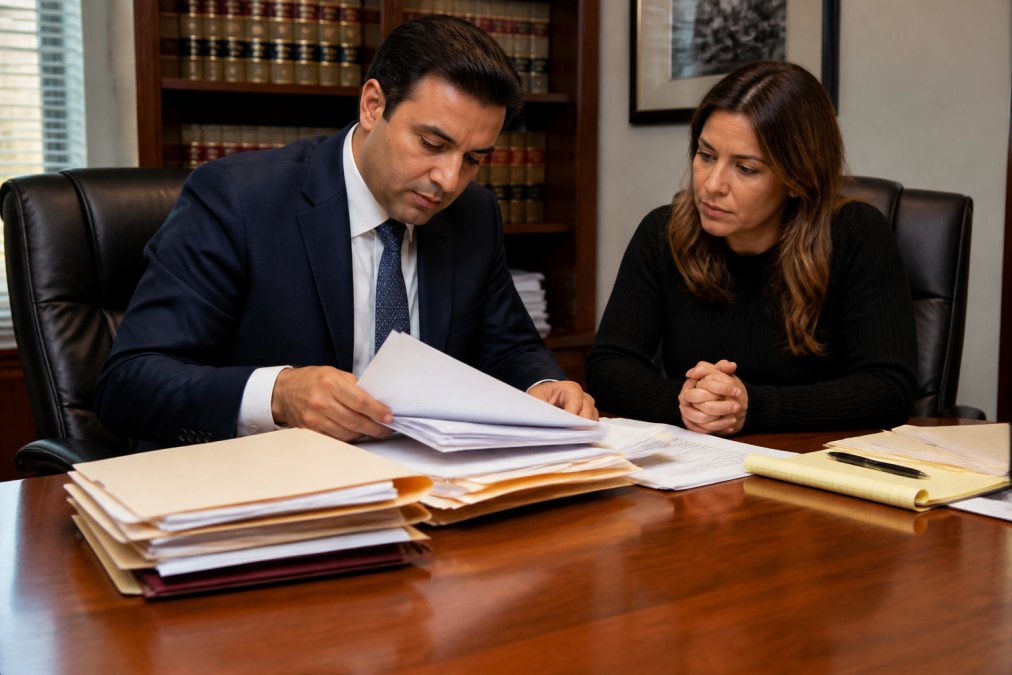
Start by creating a system to organize discovery. Use a binder or digital folder with clear sections: police reports, witness statements, evidence lists, dispatch records, surveillance footage logs, lab reports, and any other materials provided. As you review, take notes on anything that stands out, dates that don’t align, witness statements that contradict each other, evidence that seems questionable, or gaps in the prosecution’s narrative.
Your attorney will review discovery materials with specific questions in mind. Were your rights read correctly? Was the search of your person or property legal? Are witness statements consistent, or do they contain contradictions? Is there evidence the prosecution hasn’t disclosed that you’re entitled to see?
What to Look For in Police Reports
Police reports are the foundation of the prosecution’s case. Look for inconsistencies in the officer’s account, missing details, bias or assumptions, Miranda violations, and improper searches or seizures. Did police have a warrant to search you or your property? If not, evidence obtained may be inadmissible.
Witness Statements and Prosecution Evidence
Witness statements are often central to the prosecution’s case. Review them for contradictions between multiple witnesses, specificity of details, motive or bias, and prior inconsistent statements. Evidence lists should detail every item the prosecution plans to use. Missing documentation or gaps in the chain of custody can render evidence inadmissible.
Courtroom Etiquette and Psychological Preparation
How you present yourself in the courtroom matters. Judges form impressions quickly, and those impressions influence how they perceive your case. Before your preliminary hearing, you need to prepare not just legally, but psychologically and in terms of courtroom decorum.
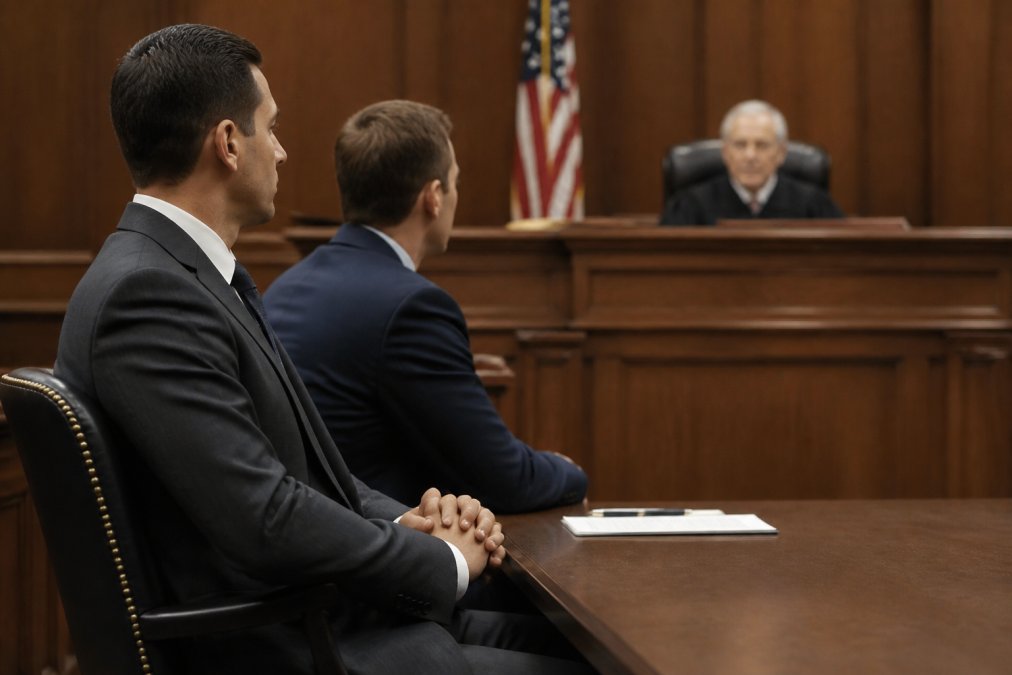
Courtroom etiquette is straightforward but essential. Dress professionally in business attire with conservative colors. Arrive early. Silence your phone. Stand when the judge enters. Address the judge as "Your Honor." Don’t interrupt. Don’t speak unless spoken to or your attorney advises you to testify. Don’t gesture or show emotion; stay calm and composed.
Psychologically, prepare yourself for what you’ll hear. The prosecution will present evidence against you. Witnesses may describe events in ways that feel unfair or inaccurate. You may feel angry, scared, or defensive. This is normal. But in the courtroom, you must remain composed. Your attorney is there to challenge the evidence and cross-examine witnesses. Your job is to sit quietly and trust your attorney’s strategy.
Many defendants find it helpful to attend the courtroom before their hearing, just to become familiar with the space. On the day of your hearing, arrive at least 30 minutes early. Meet with your attorney to review strategy one final time. Take deep breaths. Remind yourself that you’ve prepared, your attorney is experienced, and this hearing is an opportunity to challenge the prosecution’s case.
Many defendants make the mistake of trying to explain their side of the story to the judge before their attorney has a chance to present strategy. Resist this urge. Let your attorney control the narrative. If you’re called to testify, answer questions directly and briefly. Don’t volunteer information or try to convince the judge of your innocence; that’s your attorney’s job.
Cross-Examination Strategy and Witness Testimony
Cross-examination is where preliminary hearings are often won or lost. This is your attorney’s opportunity to challenge the prosecution’s witnesses, expose weaknesses in their testimony, and create doubt about the strength of the case.
Your attorney’s cross-examination strategy depends on the specific charges and witnesses. However, there are common goals. Your attorney will ask questions designed to expose inconsistencies between what the witness said now and what they said before, or differences between their account and other evidence. Your attorney may ask questions that establish bias or challenge memory and perception.
Effective cross-examination is calm, methodical, and strategic. Your attorney asks questions in a way that leads the witness toward admissions that help your case. If a witness is evasive or hostile, that works in your favor; judges notice and are often skeptical of witnesses who seem defensive.
If you testify at the preliminary hearing, you’ll be subject to cross-examination by the prosecution. This is risky, which is why most defense attorneys advise against defendant testimony at this stage. Unless your attorney specifically advises testimony as part of a strategic plan, remain silent.
One critical mistake defendants make is testifying at a preliminary hearing to “tell their side of the story.” This almost always backfires. The prosecution uses your testimony to lock in your account, identify weaknesses in your story, and prepare their case for trial. Unless your attorney specifically advises testimony as part of a strategic plan, remain silent. Silence is your right and your protection.
What Happens After the Preliminary Hearing
The outcome of your preliminary hearing determines the trajectory of your case. If the judge finds probable cause, your case is "held to answer" and moves to the next stage. If the judge finds no probable cause, charges are dismissed, a major victory.
If probable cause is found, several paths may open. You may proceed toward trial, which typically begins several months after the preliminary hearing. Before trial, your attorney will file motions to suppress evidence, dismiss charges, or modify conditions of release. Your attorney may also negotiate with the prosecution for a plea agreement, where you plead guilty to reduced charges in exchange for a lighter sentence. Many cases resolve at this stage through negotiation.
The preliminary hearing creates a record. Witness testimony is transcribed. Evidence is documented. This record becomes crucial if your case proceeds to trial. If a witness changes their story at trial, your attorney can use the preliminary hearing transcript to impeach their credibility.
This is why preparation matters so much. A preliminary hearing is not just about the immediate outcome; it’s about building a foundation for your defense throughout the entire case. At Naderi Law Office, Inc., we treat every preliminary hearing as if it’s the most important hearing in your case. We prepare aggressively, we cross-examine thoroughly, and we use the preliminary hearing to gather information and build strategy for whatever comes next.
If you’re facing a preliminary hearing in Los Angeles County, the stakes are too high to go in unprepared. The difference between thorough preparation and a rushed one often determines whether you face trial, secure a favorable plea, or have charges dismissed. At Naderi Law Office, Inc., we provide aggressive representation and strategic planning. Our team is available 24/7 to discuss your case, review your options, and build a defense strategy tailored to your situation. Contact Us Today for a free case evaluation and discover how experienced legal representation can protect your future.
Frequently Asked Questions
Q: What is the most common result of a preliminary hearing?
A: The most common outcome is that the judge finds probable cause exists and the case proceeds to arraignment or trial. However, cases can be dismissed if the prosecution fails to meet the burden of proof at preliminary hearing, meaning they cannot demonstrate sufficient evidence that a crime occurred and the defendant committed it. Some cases also result in reduced charges or settlement conferences where plea negotiations begin.
Q: How long does a preliminary hearing typically last?
A: Preliminary hearings usually last between 30 minutes and two hours, depending on case complexity and the number of prosecution witnesses. Simple cases with limited evidence may conclude quickly, while felony cases with multiple witnesses and cross-examination can extend longer. Your defense attorney can help estimate timing based on the specific charges and discovery materials involved in your preliminary hearing timeline.
Q: What is the difference between a preliminary hearing and an arraignment?
A: A preliminary hearing tests whether probable cause exists that you committed the crime, the prosecution must present evidence. An arraignment is where you're formally told of charges, advised of your rights, and asked to enter a plea. Arraignments happen before or after a preliminary hearing depending on the case. At a preliminary hearing, the focus is on evidence; at arraignment, the focus is on your plea and bail status.
Q: Do I have to testify at my preliminary hearing?
A: No. You have the constitutional right to remain silent and are not required to testify. Your defense attorney will advise whether testifying serves your strategy. Many defendants choose not to testify to avoid giving the prosecution additional statements to use later. The role of defense attorney at preliminary hearing includes deciding the best strategy for your case, which may or may not involve your testimony.
This article was written using GrandRanker