
Table of Contents
- Understanding Criminal Court Process in California: From Arrest to Verdict
- Arrest and Booking: The First Hours
- Filing of Charges and the Complaint
- Arraignment Process: Your First Court Appearance
- California Criminal Court Timeline: From Charge to Resolution
- What Happens at a Preliminary Hearing in California
- California Criminal Plea Bargain Process and Negotiations
- Pretrial Motions, Discovery, and Case Preparation
Last Updated: August 3, 2026
Understanding criminal court process in California is essential for anyone facing charges. Your freedom, career, and future depend on knowing each stage and your constitutional rights. At Naderi Law Office, Inc., we’ve guided clients through California’s criminal courts and seen how knowledge and preparation make the difference between devastating outcomes and ones that protect your future.
Why This Process Matters to You
The criminal justice system is designed to protect both public safety and individual rights, but it’s complex. Decisions made at arrest, arraignment, or during plea negotiations often determine the entire trajectory of your case. When you understand the process, you can make informed decisions about when to speak and when to stay silent, recognize where the prosecution’s case might be weak, and identify opportunities to negotiate better outcomes. Having an experienced criminal defense attorney from the very beginning is essential.
Arrest and Booking: The First Hours
Arrest occurs when law enforcement takes you into custody based on probable cause that you’ve committed a crime. During booking, police collect personal information, photograph you, take fingerprints, and conduct background checks. They may also search you and attempt to question you.
Here’s what many people get wrong: They believe cooperating fully will clear things up. In reality, anything you say can and will be used against you in court. Police are trained to extract information, and even innocent-sounding statements can become evidence of guilt.
Your Constitutional Rights During Arrest
The right to remain silent. Under the Fifth Amendment, you have the absolute right not to answer questions. Clearly state, "I want to speak to an attorney," and say nothing else. Remaining silent is not an admission of guilt, it’s a legal protection.
The right to an attorney. You have the right to legal representation. If you cannot afford an attorney, one will be appointed at no cost. Request your attorney immediately and do not answer questions until they’re present.
The right against unreasonable searches. Police cannot search you or your belongings without a warrant or consent. If they ask to search, you can refuse.
The right to be informed of charges. You must be told what crime you’re suspected of committing.
The right to a phone call. California law allows you to call an attorney or family member. Use this to contact a criminal defense attorney immediately.

Filing of Charges and the Complaint
After arrest, the prosecutor must decide whether to file charges based on probable cause. The prosecutor files a complaint outlining the charges against you. This is your first opportunity to challenge whether probable cause exists; if it doesn’t, charges can be dismissed. In California, if you’re arrested without a warrant, you must be brought before a judge within 72 hours for a probable cause hearing.
Arraignment Process: Your First Court Appearance
Arraignment is your first appearance in court after arrest. The judge will inform you of the charges, explain your rights, and address bail. The prosecutor will be present, along with your attorney.
What Happens at Arraignment
The judge will read the charges and ask if you understand them. You’ll be informed of your rights, including the right to a jury trial, the right to confront witnesses, and the right against self-incrimination. You’ll enter your initial plea: guilty, not guilty, or no contest.
Critical point: Do not plead guilty at arraignment unless you’ve thoroughly discussed your case with your attorney and understand the consequences. A guilty plea waives many rights and can result in immediate sentencing.
Bail, Own Recognizance, and Release Conditions
One of the most important decisions at arraignment involves bail. The prosecutor may request bail, and the judge will decide whether to release you and under what conditions.
Bail is money or property you post as a guarantee that you’ll return to court. If you appear at all required dates, the bail is returned to you. Own recognizance (OR) release means the judge releases you on your promise to return to court with no money required. Release conditions may include restrictions such as staying away from certain locations, avoiding contact with alleged victims or witnesses, electronic monitoring, or drug testing. Violating conditions can result in arrest and detention.
The judge considers the severity of charges, your criminal history, ties to the community, employment, and whether you’re a flight risk. Having an attorney present to argue for your release or lower bail is crucial. Naderi Law Office, Inc. has experience arguing for release or reduced bail for clients.
California Criminal Court Timeline: From Charge to Resolution
The timeline for a criminal case varies depending on the type of charge and complexity.
Misdemeanor vs. Felony Timelines
Misdemeanor cases typically move faster. A misdemeanor is punishable by up to one year in county jail:
- Arraignment: Within 72 hours of arrest
- Preliminary hearing or trial: Within 30-45 days
- Trial: Typically within 60 days of arraignment
- Sentencing: Immediately after conviction or guilty plea
Felony cases take considerably longer. A felony is punishable by more than one year in state prison:
- Arraignment: Within 72 hours of arrest
- Preliminary hearing: Within 10 court days
- Information or indictment: After preliminary hearing
- Pretrial motions and discovery: Several months to a year
- Trial: 6 months to 2 years after arraignment
- Sentencing: After conviction or guilty plea
| Case Type | Typical Timeline | Key Milestones |
|---|---|---|
| Misdemeanor | 2-6 months | Arraignment → Preliminary Hearing → Trial/Plea |
| Felony (straightforward) | 1-2 years | Arraignment → Preliminary Hearing → Pretrial Motions → Trial/Plea |
| Felony (complex) | 2+ years | Multiple pretrial hearings, extensive discovery, trial preparation |
Delays are common in California courts due to continuances, discovery disputes, scheduling conflicts, or case complexity. While frustrating, delays sometimes work in your favor by giving your attorney more time to build your defense.
What Happens at a Preliminary Hearing in California
The preliminary hearing is a critical stage in felony cases where the prosecutor must prove probable cause to believe you committed the crime. If the judge finds insufficient probable cause, charges can be dismissed.
At the preliminary hearing, the prosecutor presents evidence through witness testimony and documents. Your attorney has the right to cross-examine witnesses, challenge evidence, and expose weaknesses in the prosecution’s case. A strong preliminary hearing performance can expose weaknesses that help later negotiations or trial strategy.
Discovery at Preliminary Hearing
Discovery is the process of exchanging evidence between prosecutor and defense. The prosecution must disclose evidence to the defense, including police reports, witness statements, physical evidence, and Brady material, evidence that could help prove your innocence or reduce culpability. Your attorney has the right to request discovery before preliminary hearing, allowing time to review the case and prepare cross-examination questions.
California Criminal Plea Bargain Process and Negotiations
Most criminal cases in California are resolved through plea bargaining, not trial. A plea bargain is an agreement where you plead guilty to certain charges in exchange for concessions from the prosecutor, typically reduced charges or a sentencing recommendation. Plea bargaining is not a sign of guilt or weakness, it’s a strategic decision made after careful analysis of the evidence and the risks of trial.
Understanding Plea Agreements and Your Options
When the prosecutor makes a plea offer, you can accept the offer if you believe it’s fair and in your best interest, reject the offer and continue negotiations (offers often improve as trial approaches), or reject the offer and prepare for trial (riskier but sometimes necessary if the evidence is weak).
Types of plea agreements vary. A straight plea means you plead guilty to charges as filed. A negotiated plea might involve pleading guilty to lesser or fewer charges. A plea with a sentencing recommendation means the prosecutor agrees to recommend a specific sentence (though the judge isn’t bound by it).
Naderi Law Office, Inc. has experience negotiating plea agreements for clients. We evaluate every case carefully, comparing the risks and benefits of trial versus plea.
Pretrial Motions, Discovery, and Case Preparation
Between arraignment and trial, substantial legal work happens. Your attorney files motions, reviews discovery, and prepares your defense. Many cases are won or lost during pretrial proceedings.
Pretrial motions are requests to the court to rule on specific issues before trial. Common motions include motions to suppress evidence (challenging evidence obtained illegally), motions to sever (requesting charges be separated), motions to change venue (requesting trial be moved to a different county), and motions to dismiss (requesting charges be dismissed due to insufficient evidence or legal grounds).
Motion to Suppress and Evidentiary Hearings
The motion to suppress is one of the most powerful tools in criminal defense. If police obtained evidence without a valid warrant or violated your constitutional rights, that evidence can be excluded from trial.
An evidentiary hearing is held to decide whether evidence was obtained legally. Police testify about how they obtained evidence, whether they had a warrant, whether they had consent. Your attorney cross-examines officers and challenges their testimony. If the judge finds evidence was obtained illegally, it’s suppressed and excluded from trial, which can be devastating to the prosecution’s case.
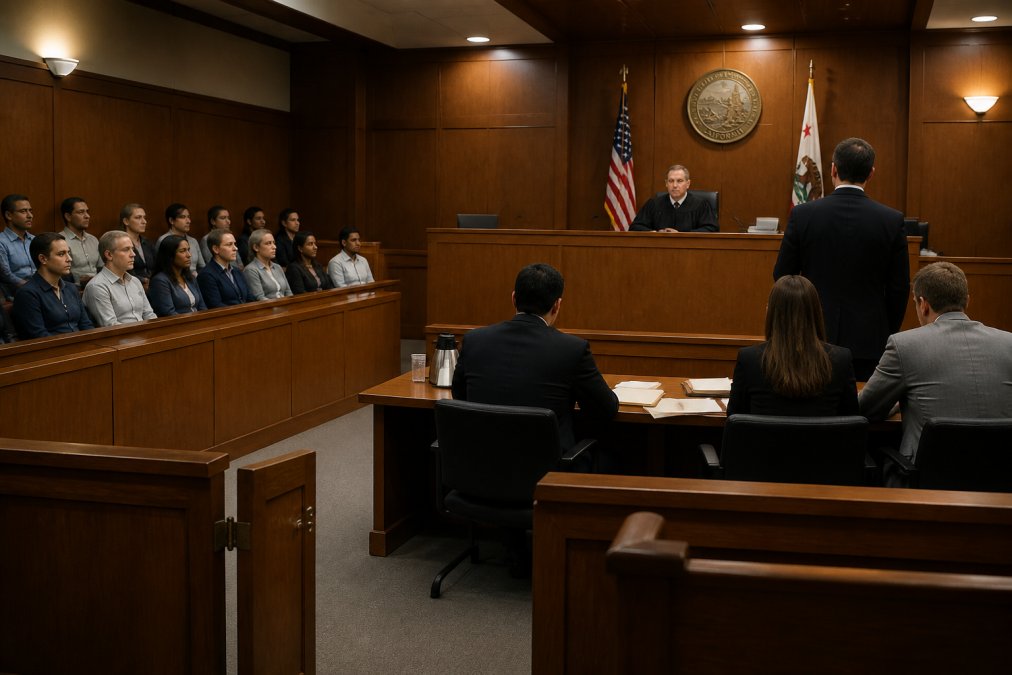
The Trial Process: Jury Selection, Evidence, and Verdict
If your case goes to trial, you have the right to a jury trial or a bench trial (judge only). A jury trial means twelve citizens will hear the evidence and decide whether the prosecution has proven guilt beyond a reasonable doubt. The burden of proof is high: beyond a reasonable doubt. If there’s reasonable doubt, you must be acquitted.
Jury selection (voir dire) is where attorneys and the judge question potential jurors to identify bias and select an impartial jury. Your attorney looks for fair-minded jurors without prejudices against your case.
During the prosecution’s case, the prosecutor presents evidence through witness testimony and documents. Your attorney has the right to cross-examine every witness, challenging testimony and exposing inconsistencies. During the defense’s case, your attorney presents evidence and witnesses on your behalf. You have the right to remain silent and not testify, and the jury cannot hold that against you.
Closing arguments allow both sides to summarize evidence and argue their case. The judge gives jury instructions explaining the law and standard of proof. The jury deliberates in private and decides whether the prosecution has met its burden. The verdict must be unanimous. If the jury unanimously agrees you’re guilty, you’re convicted. If they unanimously agree you’re not guilty, you’re acquitted. If the jury cannot reach unanimity, it’s a mistrial and the case may be retried.
Post-Conviction Relief and Expungement
If you’re convicted, you have options beyond acceptance of the verdict. Appeal is the most common form of post-conviction relief. If your attorney believes the trial was unfair due to legal errors, you can appeal to a higher court. The appellate court reviews the trial record and legal arguments.
Motion for new trial can be filed if new evidence emerges that wasn’t available at trial or if the trial was fundamentally unfair.
Expungement (or dismissal under Penal Code § 1203.4) allows you to dismiss a conviction after you’ve completed probation or served your sentence. Once dismissed, you can legally say you were not convicted of that crime in most contexts. Expungement is valuable for employment, professional licenses, and housing.
Victim’s Rights in the Criminal Process
California law recognizes victims’ rights throughout the criminal process. Victims have the right to be notified of court proceedings and case status, be present at trial and other proceedings, make a victim impact statement at sentencing, receive restitution from the defendant for losses, and be informed of the defendant’s release or parole. Understanding victim’s rights helps you understand how the prosecutor may approach your case.
Key Stages of Criminal Court Process Summary
| Stage | Timeline | Key Events | Your Rights |
|---|---|---|---|
| Arrest & Booking | Immediate | Police custody, questioning, searches | Right to silence, attorney, no unreasonable searches |
| Initial Appearance | Within 72 hours | Informed of charges, bail hearing | Right to attorney, bail/OR, due process |
| Arraignment | Within 72 hours (or soon after) | Formal charges, plea entry, bail decision | Right to counsel, bail hearing, understand charges |
| Preliminary Hearing (felony) | Within 10 days | Prosecutor proves probable cause | Right to confront witnesses, cross-examine |
| Pretrial Phase | Months to year+ | Discovery, motions, negotiations | Right to discovery, file motions, negotiate |
| Trial | Varies | Jury selection, evidence, verdict | Right to jury trial, confront witnesses, appeal |
| Sentencing | After conviction | Judge imposes sentence | Right to allocution, appeal sentence |
| Post-Conviction | After sentencing | Appeals, expungement, relief | Right to appeal, seek new trial, expungement |
Frequently Asked Questions
What are the main stages of the criminal court process in California?
The criminal court process typically includes arrest and booking, filing of charges, arraignment, preliminary hearing (for felonies), pretrial motions and discovery, plea negotiations, and either trial or sentencing. For misdemeanors, some steps may be condensed or skipped. The timeline and specific procedures depend on whether you're charged with a felony or misdemeanor, and whether you accept a plea bargain or proceed to trial. An experienced defense attorney can guide you through each stage.
How long does a typical criminal case take in California?
Misdemeanor cases may resolve in weeks to several months, while felony cases often take 6 months to over a year. The California criminal court timeline depends on case complexity, plea negotiations, discovery disputes, and court schedules. Cases that go to trial typically take longer than those resolved through plea bargains. Speedy trial rights exist under both state and federal law, but delays are common. Your attorney can estimate a timeline based on your specific charges and circumstances.
What happens at a preliminary hearing in California, and why is it important?
At a preliminary hearing, the prosecutor must present enough evidence to establish probable cause that you committed the crime. This is not a trial; the burden of proof is lower than at trial. Your defense counsel can cross-examine witnesses and challenge evidence through motions to suppress. If the judge finds insufficient evidence, charges may be dismissed. If probable cause is found, the case proceeds. A preliminary hearing is your first real opportunity to challenge the prosecution's case and discover their evidence through discovery.
How does the California criminal plea bargain process work?
Plea bargaining involves negotiation between your defense counsel and the prosecutor. The prosecutor may offer to reduce charges, recommend a lighter sentence, or dismiss some counts in exchange for a guilty plea. You must understand the consequences before accepting any plea agreement. Your attorney reviews the offer against the strength of the prosecution's case, potential trial outcomes, and your individual circumstances. Plea bargains resolve most criminal cases without trial and may result in significantly reduced penalties compared to a conviction after trial.
What are my rights if I'm arrested and taken into custody?
Your constitutional rights include the right to remain silent (Fifth Amendment), the right to an attorney (Sixth Amendment), and protection against unreasonable search and seizure (Fourth Amendment). You have the right to refuse police searches without a warrant, and you should not answer questions without your defense counsel present. You have the right to due process and to be informed of charges against you. Exercising these rights does not make you look guilty; it protects your legal position. Contact an attorney immediately after arrest.
What is the difference between a misdemeanor and a felony in California?
Misdemeanors are less serious crimes punishable by up to one year in county jail and fines. Felonies are more serious crimes that can result in state prison sentences of over one year. Felonies typically involve violence, drugs, or property crimes of significant value. Misdemeanors include many traffic violations, assault without injury, and theft under certain amounts. The distinction affects court procedures, sentencing options, and long-term consequences like professional licensing and voting rights. Your attorney can explain how your specific charges are classified.
Can I expunge or dismiss my criminal record after conviction in California?
Yes, California law allows post-conviction relief and expungement in many cases. You may petition to have charges dismissed under Penal Code Section 1203.4 after completing probation, or in some cases before probation ends. Certain convictions can be reduced from felonies to misdemeanors under Proposition 47. Some convictions can be dismissed entirely if you meet specific criteria. Expungement does not erase the record but allows you to answer that you were not arrested in many employment and licensing contexts. An attorney can evaluate your eligibility for these options.
This article was written using GrandRanker