
Table of Contents
- Understanding Battery Charges Under California Penal Code 242
- Simple Battery vs. Aggravated Battery: Key Differences
- What Happens at an Arraignment
- Penalties and Sentencing for Battery Convictions
- Legal Defenses for Battery Charges
- Immediate Steps After Being Charged
- Collateral Consequences Beyond Criminal Penalties
Last Updated: August 27, 2026
Understanding Battery Charges Under California Penal Code 242
Battery under California Penal Code Section 242 is a criminal offense that occurs when you willfully and unlawfully touch another person in a harmful or offensive manner. You don’t need to cause serious injury or visible marks, a single unwanted touch can result in criminal charges.
The key element is intent. The prosecution must prove you acted willfully, meaning you intended the act itself (not necessarily to harm someone). Unlawfully means without legal justification or consent. At Naderi Law Office, Inc., we’ve represented clients surprised to learn how broadly the law defines battery. Even a push, shove, or striking someone with an object, regardless of injury, qualifies as battery under California law.
A battery conviction affects employment, housing, professional licenses, and immigration status. Understanding what you’re facing and taking immediate action with experienced legal counsel can mean the difference between a life-altering conviction and a more favorable outcome.
Battery charges often stem from situations that escalate quickly. The first hours after arrest are critical. Contact a defense attorney immediately, not after you’ve spoken to police or family members who might give you bad advice.
Simple Battery vs. Aggravated Battery: Key Differences
The distinction between simple battery and aggravated battery determines the severity of charges and potential penalties you face.
Simple battery under Penal Code 242 involves willful and unlawful touching that is harmful or offensive. Typically charged as a misdemeanor, penalties include up to six months in county jail, fines, probation, and a criminal record (leginfo.legislature.ca.gov).
Aggravated battery under Penal Code 243 occurs when the battery causes serious bodily injury or is committed against protected persons (elderly individuals, pregnant women, or peace officers). Aggravated battery carries felony penalties including up to four years in state prison (leginfo.legislature.ca.gov).
The distinction hinges on injury severity, victim identity, and offense circumstances. If you caused serious bodily injury, significant or substantial physical injury, not minor cuts or bruising, the charge escalates to aggravated battery. If your victim was elderly, pregnant, a peace officer, or a person with a developmental disability, the charge becomes more serious regardless of injury severity.
Consider this scenario: pushing someone during an argument results in simple battery charges. That same push against a pregnant woman results in aggravated battery charges. The act is identical; the victim status transforms the legal consequence.
Never assume your case will be charged as simple battery. Prosecutors have discretion in how they charge offenses. A case that appears straightforward can be charged more severely if the victim meets protected-person criteria or if injuries are documented as “serious.” Discuss charge possibilities with your attorney immediately.
What Happens at an Arraignment
Your arraignment is your first court appearance after arrest, typically occurring within 72 hours (leginfo.legislature.ca.gov). The judge informs you of charges, explains your rights, determines bail or release conditions, and you enter a plea.
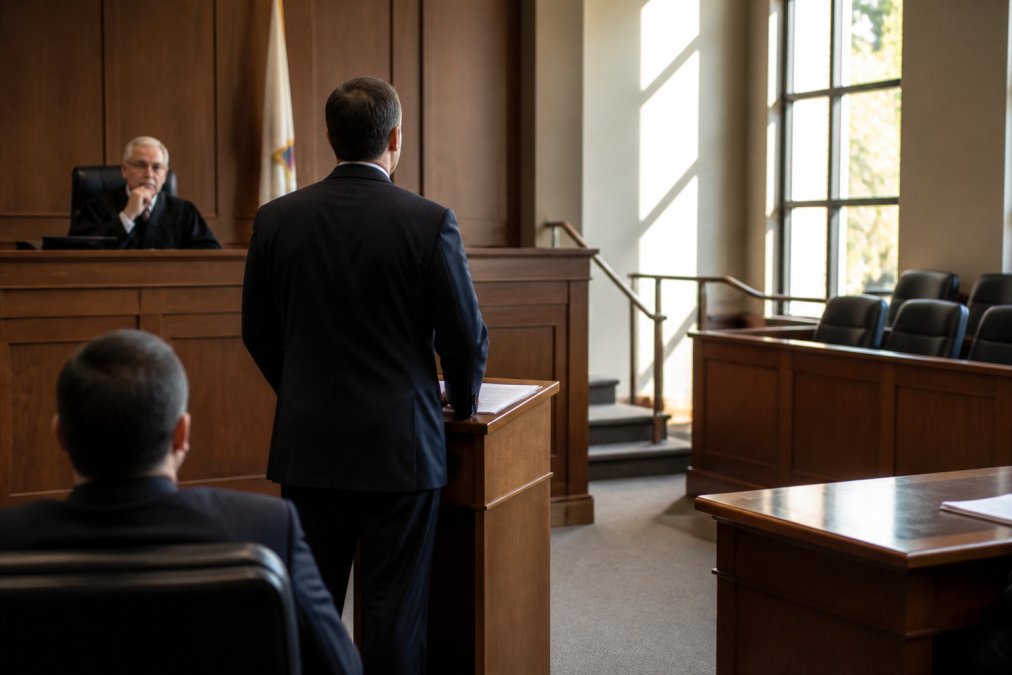
The judge will read the specific statute violated and facts the prosecution alleges. You’ll be informed of your rights, including your right to an attorney, your right to remain silent, and your right to a trial. If you cannot afford an attorney, you can request a public defender.
The bail hearing determines whether you’re released before trial and under what conditions. The judge considers charge severity, your criminal history, community ties, employment status, and whether you pose a flight risk. Bail can be released on your own recognizance, set at a specific amount, or denied.
Your plea entry is critical. You’ll be asked to enter a plea of guilty, not guilty, or no contest. This is not the moment to make decisions. Many defendants plead guilty at arraignment without understanding their options or consulting an attorney. You have the right to enter a not guilty plea and preserve your right to defend yourself.
The arraignment establishes your attorney relationship. If you’ve hired private counsel, your attorney should be present. If you qualify for a public defender, one will be appointed. This is your opportunity to discuss your case and begin developing your defense strategy.
The arraignment is not the place to resolve your case. It’s the place to understand charges, secure release if possible, and establish legal representation. Treat it as the beginning of your defense, not the end of the road.
Penalties and Sentencing for Battery Convictions
Battery convictions carry consequences that vary based on whether the offense is charged as a misdemeanor or felony, the victim’s status, and your criminal history.
For simple battery charged as a misdemeanor, penalties include:
- Up to six months in county jail
- Fines up to $1,000
- Misdemeanor probation (typically three to five years)
- Restitution to the victim for medical expenses or other losses
- Anger management or counseling classes
If simple battery is charged as a felony, penalties increase to up to three years in state prison.
For aggravated battery, penalties are substantially harsher:
- Up to four years in state prison for felony charges
- Fines up to $10,000
- Felony probation conditions
- Mandatory restitution
Sentencing guidelines consider your prior criminal history, injury extent, whether weapons were involved, and aggravating or mitigating circumstances. A first-time offender with no prior record faces different sentencing than someone with multiple convictions. Your attorney can present mitigating factors, employment history, community ties, lack of prior criminal conduct, or circumstances that provoked the incident, that influence the judge’s sentencing decision.
Legal Defenses for Battery Charges
Several legal defenses are available for battery charges, and the strength of each depends on the specific facts of your case.
Lack of willfulness is a fundamental defense. If you did not act willfully, if the contact was accidental or unintentional, you lack the mental state required for battery. The prosecution must prove willfulness beyond a reasonable doubt.
Consent is another valid defense. If the alleged victim consented to the contact, battery did not occur. This applies in sports, martial arts training, or other situations where physical contact is expected and agreed upon.
Self-defense is perhaps the most commonly asserted defense. California law permits you to use reasonable force to defend yourself from imminent harm or unlawful force. The force you used must be proportional to the threat you faced. If you reasonably believed you were in danger and used only the force necessary to protect yourself, self-defense applies.
Defense of others operates similarly. You can use reasonable force to defend another person from imminent harm, provided the force is proportional and necessary.
Misidentification challenges the foundation of the prosecution’s case. If witnesses misidentified you or if video evidence shows someone else was responsible, the charges cannot stand.
Insufficient evidence is always available. The prosecution bears the burden of proving every element of battery beyond a reasonable doubt. If the evidence is weak, contradictory, or incomplete, an acquittal is possible.
Early investigation and evidence preservation can make the difference between conviction and acquittal.
Immediate Steps After Being Charged
The hours and days immediately following a battery charge are critical. The decisions you make during this period significantly impact your case outcome.

Do not speak to police without an attorney present. This is the single most important step. Anything you say can and will be used against you. Politely decline to answer questions and request an attorney.
Contact an attorney immediately. Do not delay. Call a criminal defense attorney the same day you’re charged or arrested. Early representation allows your attorney to investigate the incident, preserve evidence, interview witnesses, and begin developing your defense strategy.
Gather documentation and information. Write down everything you remember about the incident while details are fresh: the date, time, location, who was present, what led to the altercation, and exactly what happened. Collect contact information for potential witnesses. Preserve any medical records, photographs, or other evidence supporting your version of events.
Avoid social media. Do not post about your case, the incident, or your feelings about what happened. Do not message the alleged victim, witnesses, or anyone connected to the case. Assume everything you write will be seen by the prosecution.
Follow all court orders and bail conditions. If you’ve been released on bail or your own recognizance, comply strictly with all conditions. If you’re ordered to have no contact with the alleged victim, follow that order exactly.
Maintain confidentiality in communications. Speak about your case only with your attorney. Attorney-client communications are privileged and cannot be disclosed.
Collateral Consequences Beyond Criminal Penalties
A battery conviction carries consequences that extend far beyond jail time, fines, and probation. These collateral consequences often prove more damaging to your life than the criminal penalties themselves.
Employment consequences are immediate and severe. Many employers will not hire individuals with battery convictions. Professional licenses in law, medicine, nursing, and other regulated fields can be suspended or revoked.
Housing and rental consequences follow conviction. Landlords routinely deny housing to applicants with criminal records.
Immigration consequences are severe if you’re not a U.S. citizen. Battery convictions can trigger deportation proceedings. Even permanent residents face removal.
Gun rights are affected. A felony battery conviction results in permanent loss of your right to own or possess firearms.
Custody and family law consequences are substantial. A battery conviction affects child custody decisions. Family courts consider criminal history when determining custody and visitation rights.
Financial consequences extend beyond court-ordered fines. You may owe restitution to the victim for medical expenses, lost wages, and other damages.
Voting and civic participation are restricted. Felony convictions result in temporary loss of voting rights.
These collateral consequences underscore why aggressive legal defense is essential. The fight to avoid conviction isn’t just about avoiding jail time, it’s about protecting your career, your family, your freedom, and your future.
A battery conviction reshapes your life in ways that extend far beyond the courtroom. Employment, housing, professional licensing, family relationships, and financial stability are all at risk. This reality makes early, aggressive legal representation not just advisable, it’s essential.
A battery charge is a serious criminal matter that demands immediate, aggressive legal response. The consequences, both criminal and collateral, are substantial enough to reshape your life if you don’t act decisively. At Naderi Law Office, Inc., we understand the urgency and complexity of battery charges. Our team of experienced criminal defense attorneys is available 24/7 to evaluate your case, explain your options, and develop a personalized defense strategy. Contact Naderi Law Office, Inc. today for a free case evaluation and secure the aggressive defense you deserve.
Frequently Asked Questions
What is the difference between assault and battery under California law?
Assault involves attempted or threatened harm without physical contact, while battery requires actual physical contact or offensive touching. Under California Penal Code 242, battery is the intentional infliction of physical harm on another person. Assault charges can result in penalties even if no contact occurs. Battery charges are more serious because they involve unlawful contact that causes injury or offensive touching. Many cases involve both charges together.
What are the potential penalties for a misdemeanor battery conviction?
A misdemeanor battery conviction can result in up to six months in jail, fines up to $1,000, or both. Probation is also common, typically lasting three years. If the victim was pregnant, elderly, or disabled, penalties may increase. The exact sentence depends on the circumstances, your criminal history, and victim status. An experienced attorney can negotiate for reduced charges or alternative sentencing options.
Can a battery charge be dismissed or reduced?
Yes. Battery charges can be dismissed if evidence is insufficient, if your rights were violated during arrest, or if the prosecution cannot prove the elements of the crime beyond reasonable doubt. Charges can be reduced through plea bargaining to lesser offenses like simple assault or disturbing the peace. Defenses for battery charges include self-defense, consent, lack of intent, or mistaken identity. An aggressive defense strategy early in the process increases your chances of dismissal or reduction.
How will a battery conviction affect my employment and professional license?
A battery conviction can have serious collateral consequences. Many employers conduct background checks and may terminate employment or refuse to hire you. Professional licenses in healthcare, law, education, and other fields may be suspended or revoked. Some convictions require disclosure to licensing boards. A criminal record can also affect housing applications, loan eligibility, and immigration status. Working with an attorney to minimize the conviction's impact on your professional future is critical.
This article was written using GrandRanker