
Table of Contents
- Understanding Your Driving Privileges After a DUI Suspension
- DUI License Suspension Duration and Waiting Periods
- Eligibility Requirements for a Restricted License
- DUI Hardship License Requirements You Must Meet
- Application Process and Documentation
- Ignition Interlock Device Installation Cost and Requirements
- Permitted Driving Purposes Under a Restricted License
- What to Do If Your Application Is Denied
Last Updated: August 16, 2026
Understanding Your Driving Privileges After a DUI Suspension
A DUI conviction triggers automatic license suspension, but you may still have options to restore some driving privileges. A restricted license after DUI suspension allows you to drive for essential purposes like work, school, or medical appointments while serving your suspension period. Understanding this process early can minimize disruption to your employment, education, and family obligations.
At Naderi Law Office, Inc., we help clients navigate this complex process. Our team understands the urgency of maintaining work-related driving privileges and the documentation requirements that determine approval. The steps you take immediately after suspension can significantly impact whether your application succeeds or faces denial.
DUI License Suspension Duration and Waiting Periods
The length of your DUI license suspension depends on several factors: whether this is your first offense, your blood alcohol content (BAC) level at the time of arrest, and whether you refused a chemical test. Most first-time DUI suspensions range from six months to one year, though repeat offenses carry substantially longer suspension periods.
Understanding the timeline is crucial because waiting periods directly affect when you become eligible for a restricted license. Many jurisdictions impose a mandatory waiting period before you can even apply, typically 30 to 90 days from the suspension date. Some states offer "hardship relief" that may reduce this waiting period if you can demonstrate genuine hardship, though provisions vary significantly by jurisdiction.
Your driving record, the specific charges you face, and any prior convictions all factor into suspension length. A DUI with property damage or injury carries different suspension terms than a simple DUI. Court-ordered treatment completion may also affect your eligibility timeline, as some jurisdictions won’t consider your restricted license application until you’ve completed a mandatory DUI education program.
Eligibility Requirements for a Restricted License
You must satisfy multiple eligibility criteria before applying for a restricted license after DUI suspension. First, you must have served the mandatory waiting period imposed by your jurisdiction. Second, you typically need proof of financial responsibility, usually an SR-22 insurance form or equivalent. Third, you must demonstrate a valid reason for needing driving privileges: employment, education, medical treatment, or court-ordered obligations like DUI program attendance.
Some jurisdictions require that you’ve already enrolled in or completed a court-ordered DUI education program. Your criminal history matters significantly, a first-time DUI offense generally makes you eligible for restricted privileges, while multiple DUI convictions may disqualify you entirely or require a court petition. Age also matters; drivers under 21 typically face stricter restrictions and longer suspension periods.
Hardship License vs. Restricted License: Key Differences
A hardship license is a temporary permit issued by the court when you demonstrate extreme hardship, such as loss of employment or inability to access medical care. A restricted license after DUI is a more standard permit granted after meeting specific eligibility requirements, regardless of hardship.
The hardship license usually comes first, during the early part of your suspension when you haven’t yet met standard eligibility criteria. It’s discretionary; the court decides whether your circumstances warrant it. A restricted license is more formulaic: meet the requirements, submit the paperwork, and you’re generally approved if everything is in order.
Hardship licenses often have stricter driving limitations, such as driving only to work and back with no detours. Restricted licenses sometimes allow broader purposes: work, school, medical appointments, and DUI program attendance. The application processes differ too, a hardship license typically requires a court petition and hearing, while a restricted license usually involves submitting forms to your state’s motor vehicle department.
DUI Hardship License Requirements You Must Meet
If you’re in the early stages of suspension and haven’t yet met standard eligibility criteria, a hardship license may be your only option for maintaining driving privileges. You must demonstrate genuine hardship with documented consequences from losing driving privileges.
Loss of employment is the most common hardship justification. You’ll need letters from your employer stating that your job depends on driving or that you’ll be terminated without driving access. Medical necessity is another strong justification: ongoing treatment, dialysis, chemotherapy, or care for a dependent family member that you alone can provide.
Documentation is everything. Bring proof of your employment situation, medical records if applicable, evidence of your good character, and any other supporting documents. The court will scrutinize your claim. Some jurisdictions require that you’ve already enrolled in a DUI education program before requesting hardship relief, or want to see evidence that you’re taking responsibility through counseling or community service.
Application Process and Documentation
The application process for a restricted license after DUI involves several steps, and missing even one can result in denial. Start by gathering required documentation before you submit anything.

First, obtain your SR-22 insurance form from your insurance provider. This document proves you have the minimum required liability coverage. Your insurer will submit it directly to your state’s motor vehicle department. Without this, your application will be denied immediately.
Second, compile proof of enrollment or completion in a DUI education program. This might be a certificate of completion, a letter from the program confirming your enrollment, or court documents showing the program requirement.
Third, gather documentation supporting your reason for needing driving privileges. For employment, provide a letter from your employer on company letterhead stating that your position requires driving or that you’ll lose your job without it. For school, provide enrollment verification and a statement explaining why you need to drive. For medical reasons, provide medical records and appointment letters.
Fourth, complete the application form for your specific jurisdiction. Read the instructions carefully; many applications are rejected because applicants miss required fields or don’t follow formatting requirements.
SR-22 Insurance Requirements for Restricted License
An SR-22 form is a certificate of financial responsibility. It proves to the state that you carry the minimum required auto insurance coverage. This is mandatory for anyone with a DUI conviction, regardless of whether you’re seeking a restricted license.
Contact your current insurance provider first. If they won’t provide an SR-22, you’ll need to find a new insurer. Many insurance companies specialize in high-risk drivers. The SR-22 form itself is free; your insurer files it with the state at no cost. However, your insurance premiums will likely increase significantly after a DUI conviction.
The SR-22 must remain active for the duration of your suspension and restricted license period. If your policy lapses or you cancel coverage, your restricted license is automatically suspended. Keep copies of your SR-22 form and your insurance policy in your vehicle at all times.
Ignition Interlock Device Installation Cost and Requirements
Many jurisdictions require installation of an ignition interlock device (IID) as a condition of receiving a restricted license after DUI suspension. An IID is a breathalyzer connected to your vehicle’s ignition system. You must provide a breath sample before the engine starts. If your BAC exceeds a set limit (typically 0.02%), the vehicle won’t start.
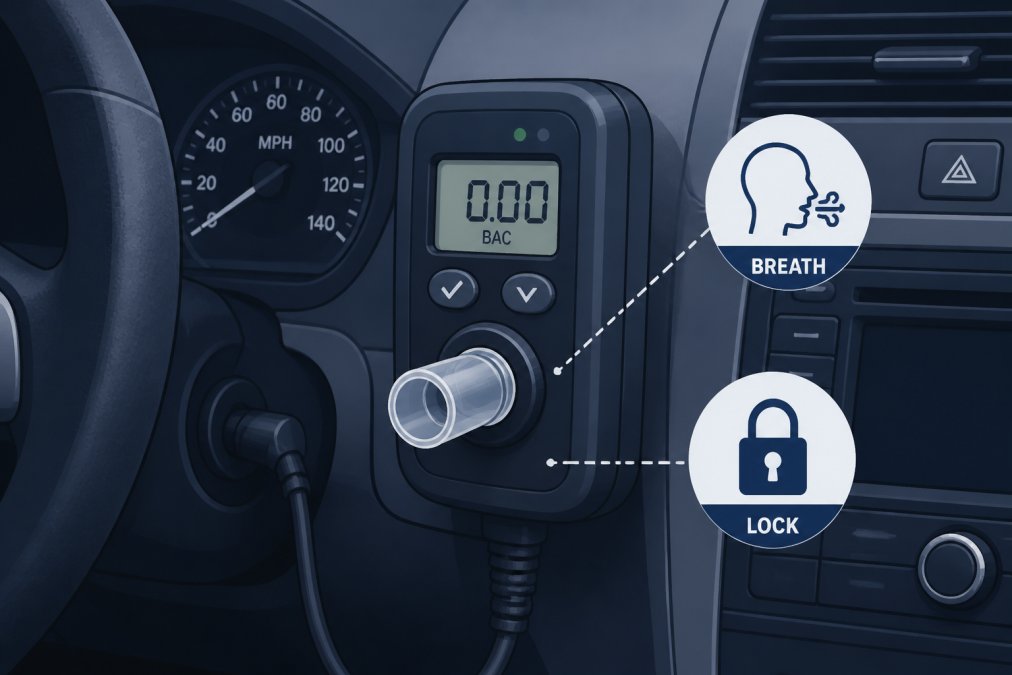
IID installation typically costs between $70 and $150 for the initial setup. Monthly monitoring fees range from $50 to $100. Over a typical one-year restricted license period, you could spend $600 to $1,200 on IID expenses alone. The device requires regular maintenance and calibration through monthly visits to the service provider. Missing these appointments can result in violations that lead to license suspension.
The IID records all breath samples and attempts to start your vehicle. If you fail a breath test, the device logs it. Multiple failures can trigger license suspension or extended IID requirements. Some devices also require "rolling retests," additional breath samples while driving, to ensure you haven’t consumed alcohol since the initial test.
Permitted Driving Purposes Under a Restricted License
A restricted license after DUI suspension doesn’t give you unlimited driving privileges. You can drive only for specific, approved purposes. Violating these restrictions results in immediate license suspension and additional criminal charges.
The most common permitted purposes are employment-related driving, school attendance, and medical appointments. You can typically drive directly to and from work, with no detours. If your job requires driving, your restricted license may permit work-related driving within your service territory.
Educational purposes include driving to and from school or university, and sometimes to approved tutoring or training programs. Medical appointments include driving to doctor’s offices, hospitals, therapy, and other healthcare facilities. You can also drive to court-ordered DUI education programs, counseling, and treatment facilities.
Some jurisdictions permit driving for essential household purposes: grocery shopping, paying bills, childcare, and similar necessities. However, these are more restricted than work or school driving. The restrictions are enforced through your license itself, which will list the permitted purposes.
What to Do If Your Application Is Denied
A denied restricted license application is frustrating, but it’s not necessarily final. Understanding why you were denied and what you can do about it is crucial.
Common denial reasons include incomplete documentation, failure to meet eligibility requirements, insufficient proof of hardship, or failure to enroll in required DUI programs. Request a written explanation of the denial from your motor vehicle department. In many cases, you can reapply immediately after addressing the issue.
If the denial is based on discretionary factors, you may have an appeals process. Some jurisdictions allow you to request an administrative hearing where you can present additional evidence and argue your case. Naderi Law Office, Inc. helps clients appeal denied applications by identifying what went wrong and presenting a stronger case the second time.
If you were denied because you didn’t meet eligibility requirements, focus on meeting those requirements. Complete your DUI education program, maintain perfect driving record compliance, and gather stronger documentation of your need for driving privileges. Reapply as soon as you become eligible.
Losing driving privileges after a DUI conviction creates immediate pressure on your employment, education, and family obligations. A restricted license after DUI suspension offers a lifeline, but only if you understand the requirements and navigate the application process correctly. Naderi Law Office, Inc. provides the guidance you need to strengthen your application, avoid common mistakes, and maximize your chances of approval. Contact us today for a free case evaluation to discuss your specific situation and explore your options for restoring driving privileges.
Frequently Asked Questions
How long is the mandatory waiting period before I can apply for a restricted license after a DUI suspension?
The waiting period depends on your state and the circumstances of your DUI. In many states, you must serve a portion of your suspension before becoming eligible to apply. Some states allow you to apply immediately after arrest, while others require you to wait 30 days or more. Check your state's motor vehicle department website or consult with an attorney to determine your specific waiting period, as it varies by jurisdiction and whether this is your first offense.
What is the difference between a restricted license and a hardship license?
While the terms are sometimes used interchangeably, they can differ by state. A hardship license typically allows limited driving for essential purposes like work, school, or medical appointments during a suspension. A restricted license may have similar limitations but often requires compliance with additional conditions like ignition interlock device installation. Both limit where and when you can drive compared to a standard license. Your state's specific definitions and requirements will determine which option applies to your situation.
Do I need SR-22 insurance to get a restricted license after a DUI?
Yes, SR-22 insurance (proof of financial responsibility) is typically required to obtain and maintain a restricted license after a DUI. SR-22 is a certificate filed by your insurance company with your state's motor vehicle department, confirming you carry the minimum required liability coverage. You'll need to obtain this before applying for your restricted license and maintain it for the duration specified by your state, usually three years. Contact your insurance provider to add SR-22 to your policy.
Will I need an ignition interlock device installed in my vehicle?
Many states require ignition interlock device (IID) installation as a condition of obtaining a restricted license, particularly for DUI offenses. An IID requires you to provide a breath sample before the vehicle will start. Installation costs and duration requirements vary by state and offense severity. Some states mandate IID for first-time offenders, while others only require it for repeat offenses or higher blood alcohol content levels. Your state's requirements and your specific case circumstances will determine whether an IID is necessary for your restricted license eligibility.
This article was written using GrandRanker