
Last Updated: October 25, 2026
Quick Summary
A dedicated criminal lawyer investigates thoroughly, communicates openly, and builds a strategy tailored to your situation, going far beyond simply showing up to court. Signs of genuine commitment include extensive courtroom experience, detailed case preparation, honest assessments of your case, and consistent communication with measurable response times.
- Ask potential attorneys how many cases they’ve taken to trial in the last three years; zero or very few indicates lack of courtroom confidence.
- Verify bar status online and check public court records for patterns of favorable plea deals, dismissed charges, and effective evidence challenges.
- Set communication terms in writing at the start, including update frequency, preferred contact channel, and specific response time targets.
- Red flags include guaranteeing specific outcomes, showing more interest in your ability to pay than case details, or failing to return calls for days or weeks.
- A truly dedicated lawyer files motions proactively, investigates beyond prosecution materials, interviews witnesses, and adjusts strategy based on new information.
Table of Contents
- Signs of a Dedicated Criminal Lawyer Who Fights for Your Case
- Extensive Courtroom Experience and Trial Readiness
- How to Verify an Attorney’s Credentials and Background
- Criminal Defense Lawyer Questions to Ask During Your Initial Consultation
- Evaluating Your Criminal Lawyer Track Record and Case Results
- Criminal Defense Lawyer Red Flags to Watch For
- Communication, Availability, and Ongoing Case Commitment
- Schedule Your Free Case Evaluation Today
- Frequently Asked Questions
Signs of a Dedicated Criminal Lawyer Who Fights for Your Case
Finding a criminal defense attorney who genuinely fights for your freedom is one of the most important decisions you’ll make. Some lawyers treat cases like transactions; others invest deeply in your outcome. (Source: U.S. Bureau of Labor Statistics)
At Naderi Law Office, Inc., we understand that a dedicated criminal lawyer goes far beyond showing up to court.
How do you identify a dedicated criminal lawyer before you hire them? These seven concrete indicators separate genuine commitment from surface-level representation.
Extensive Courtroom Experience and Trial Readiness
A dedicated criminal lawyer has spent substantial time inside courtrooms, the ability to read a judge, anticipate prosecution tactics, and adapt strategy in real time.
Ask how many cases they’ve taken to trial in the last three years. Zero or very few is a warning sign: lawyers who rarely try cases often lack courtroom confidence.
Look for these specific indicators:
- They can describe their trial strategy in detail, not generalities
- They’ve handled cases similar to yours, not just adjacent practice areas
- They can name specific judges and explain how to work effectively with each one
Trial-ready attorneys prepare every case as if it will go to trial, even when negotiation is likely, and that preparation strengthens your negotiating position.
Employment of lawyers is projected to grow 5% from 2025 to 2035 according to the U.S. Bureau of Labor Statistics, but not all attorneys develop the courtroom skills required for serious criminal defense.
How to Verify an Attorney’s Credentials and Background
Before you commit to representation, verify what an attorney claims about their background.
Start by checking bar status, every licensed attorney must be registered with the state bar, verifiable online in seconds.
Ask these verification questions:
- Are you in good standing with the state bar with no disciplinary history?
- Have you handled felony cases, misdemeanor cases, or both?
- What percentage of your practice focuses on criminal defense versus other areas?
A dedicated attorney will welcome these questions and provide verifiable information without hesitation.
You can also verify an attorney’s track record through public court records, which often show case outcomes, sentencing results, and how aggressively an attorney challenged evidence or negotiated plea deals.
Look for patterns: favorable plea deals, motions that got charges dismissed, effective challenges to evidence.
Criminal Defense Lawyer Questions to Ask During Your Initial Consultation
The initial consultation is your opportunity to assess whether this attorney will truly fight for your case. Come prepared with specific questions.
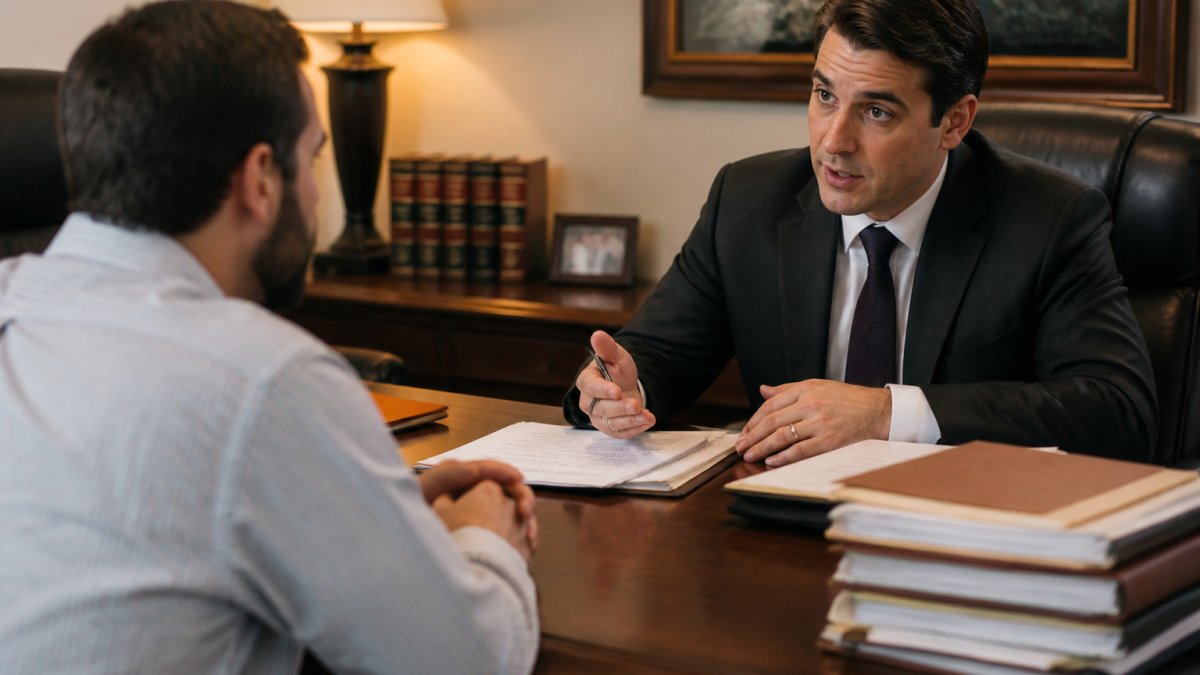
Start with these core questions:
- What’s your honest assessment of my case? (Listen for specificity, not false reassurance)
- What are the prosecution’s likely strategies?
- What evidence do you need to investigate further?
Pay attention to how they listen: do they let you fully explain, take notes, and ask follow-up questions that show strategic thinking about your defense?
Also ask about availability. You can learn how to communicate effectively with your defense attorney, but first confirm: Are you available 24/7 for emergencies?
A lawyer who claims 24/7 availability but takes days to return calls isn’t dedicated. One who answers directly and commits to specific response times demonstrates real commitment.
Evaluating Your Criminal Lawyer Track Record and Case Results
Past performance predicts future performance. A dedicated attorney will have measurable results to show.
Don’t just ask “How many cases have you won?” That question is too vague.
Ask for specific outcomes:
- How many cases resulted in dismissed charges?
- What’s the average sentence reduction you’ve negotiated?
- How many clients avoided prison time through your negotiation?
A lawyer with strong results will discuss these metrics openly, not client names (confidentiality rules apply), but aggregate results and specific case types.
You can also review how to hire a criminal lawyer for felony charges, which includes guidance on evaluating track records for serious offenses, especially important where the stakes are highest.
Look for consistency.
Criminal Defense Lawyer Red Flags to Watch For
Some warning signs appear immediately; others emerge over time. Know what to watch for, and what to do when you see them.
Red flags during the initial consultation
- The attorney guarantees a specific outcome. No honest lawyer can promise a dismissal, an acquittal, or a particular sentence.
- They seem more interested in your ability to pay than your case details.
- They rush through questions or seem distracted.
Red flags after you have hired them
- They do not return your calls for days or weeks.
- They have not investigated the case or reviewed evidence thoroughly.
- They pressure you to accept a plea deal without exploring other options.
The number of lawyers nationwide grew by more than 41,000 from 2014 to 2024 according to [the American Bar Association Demographics survey](https://www.americanbar.org/news/profile-legal-profession/), but not all of them maintain the same standards of dedication. A lawyer who exhibits these red flags is not dedicated to your case. They are dedicated to their caseload.
How to raise a concern without blowing up the relationship
A single missed call is not a crisis. A pattern is. Before you consider changing lawyers, try a direct conversation, ideally by phone and followed by a short email summarizing what was agreed.
- Be specific. “I have not received an update since the March 4 hearing, and I have called twice” lands better than “you never communicate.”
- Ask for a plan, not an apology. “Can we agree that I will get an update within three business days after each court date?”
- Put the fix in writing. A confirming email creates a record and gives both sides a shared benchmark.
Dedication does not mean a guarantee. No lawyer can promise that charges will be dismissed or that you will avoid a conviction. A lawyer who predicts a specific result with confidence is giving you a sales pitch, not a legal assessment. Candid risk discussions, including the weaknesses in your case, are themselves a sign of commitment.
When to seek a second opinion
A second opinion is a consultation with another attorney to review your case status. It is not a substitute for your current lawyer and does not require you to change representation. Consider one if:
- You have received conflicting advice about a plea offer.
- You are unsure whether a motion to suppress or another pretrial motion has been considered.
- You have not received a clear explanation of the possible sentence and collateral consequences.
Bring your court paperwork, any discovery received, and a written timeline. Most consultations are confidential, but tell the new attorney you are currently represented so they can handle the conversation appropriately.
How changing lawyers actually works
If you decide to change counsel, the mechanics depend on your jurisdiction and the stage of the case:
- Substitution of counsel. In most courts, new counsel files a notice of substitution or a motion to substitute, and the court must approve the change. The judge may ask about timing, especially if trial is near.
- Withdrawal by your current lawyer. An attorney generally cannot simply abandon a client mid-case. They must file a motion to withdraw, and the court decides whether to grant it. Judges are often reluctant to allow withdrawal close to trial.
- Fees and files. Review your engagement letter for what happens to any unused retainer and confirm that your file, including discovery and correspondence, will be transferred. Rules on returning client files vary by state bar.
A dedicated lawyer will not retaliate against a client who raises concerns in good faith. If you are considering a change, document your requests and the responses, that record matters if the issue ever comes before the court.
Watch for these warning signs during your initial consultation and after hiring an attorney.
| Warning Sign | When It Appears | What It Indicates |
|---|---|---|
| Guarantees a specific outcome | Initial consultation | Dishonest; no lawyer can promise dismissal or acquittal |
| More interested in your ability to pay | Initial consultation | Not focused on your case details |
| Does not return calls for days or weeks | After hiring | Lack of commitment to your representation |
| Has not investigated case thoroughly | After hiring | Inadequate case preparation |
| Pressures you to accept plea without exploring options | After hiring | Not fighting for your best interests |
| Seems surprised by basic case facts in court | After hiring | Unprepared and disengaged |
| Misses deadlines or appears unprepared for hearings | After hiring | Serious failure in professional duty |
Communication, Availability, and Ongoing Case Commitment
This is where many attorneys fail their clients: they take the case, then disappear. The fix is to treat communication as an agreement you can measure, not a personality trait.
Set the terms in writing at the start
Before the representation begins, agree on four things and ask for them in the engagement letter or a follow-up email:
- Update frequency. A common pattern is a substantive update after every court appearance and at least once every 30 days while the case is pending. Ask what the lawyer’s default cadence is and whether it changes during quiet periods.
- Preferred channel. Confirm whether routine updates come by phone, email, or a client portal, and which channel is reserved for emergencies. Mixing the two is how messages get missed.
- Who you talk to. Ask whether you will speak with the attorney directly or with a paralegal or case manager for scheduling and document questions. Both models can work, but you should know which one you are buying.
Write the agreed cadence and response targets into a short email to the lawyer after the meeting. A simple “confirming what we discussed” message creates a record without being confrontational, and it gives you a benchmark to point to later.
A stage-by-stage checklist for a lawyer you already hired
Most guidance focuses on choosing counsel. The harder question is whether the lawyer you have is actually engaged. Use this checklist at each stage:
Right after hiring
- You received a signed engagement letter that states the scope of representation and the fee arrangement.
- The lawyer or staff requested your version of events, names of witnesses, and any documents or messages you have.
- You were told the next court date and what, if anything, you need to do before it.
During investigation
- The lawyer can describe what evidence has been requested from the prosecution, including police reports, body-worn camera footage, and lab results.
- You are told which witnesses have been interviewed or are scheduled to be interviewed.
- You receive copies of key filings or at least a plain-language summary of them.
Before each court appearance
- You get a call or meeting to review what will happen, who will speak, and what the judge is likely to decide.
- You know whether your presence is required and what to wear and bring.
- You are told what the lawyer plans to argue or request.
After each court appearance
- You receive an update within a few business days explaining what happened and what comes next.
- Any new deadline or court date is confirmed in writing.
During plea discussions
- The lawyer explains the offer, the likely sentence under the applicable guidelines, and the collateral consequences such as license or employment effects.
- You are told what alternatives were explored before accepting a plea.
Before trial, if the case goes that way
- You receive a preparation session covering testimony, cross-examination, and courtroom procedure.
- The lawyer can explain the defense theory and the evidence that supports it.
If two or more items are consistently missing, that is a pattern worth raising, not proof of incompetence, but a signal the working relationship needs a reset.
What proactive representation looks like
Watch for these positive signs of ongoing commitment:
- They file motions proactively, not just reactively.
- They investigate beyond what the prosecution provides.
- They interview potential witnesses.
You can learn more about how to communicate effectively with your defense attorney to ensure you are getting the responsiveness you need. But a truly dedicated lawyer makes this easy. They do not require you to manage them.
Over the course of your case, you should see evidence of this commitment: emails with investigation updates, calls explaining strategy, detailed preparation before court dates.
Schedule Your Free Case Evaluation Today
Finding a dedicated criminal lawyer requires asking the right questions and watching for the right signs.
At Naderi Law Office, Inc., we provide aggressive criminal defense representation for individuals facing charges. We offer a free case evaluation so you can understand your options without financial pressure.
Contact Naderi Law Office, Inc. today. Get the experienced, dedicated representation your case deserves.
Frequently Asked Questions
How can I verify a criminal defense attorney’s license and disciplinary history?
You can verify an attorney’s license and check for disciplinary complaints through your state bar association’s online directory. Most state bars allow you to search by name and view the attorney’s standing, any past complaints, and disciplinary actions. This is a free service and takes only minutes. Always confirm that the attorney is in good standing before signing a representation agreement. If you cannot find the attorney listed, that is a major red flag.
What questions should I ask a criminal defense lawyer before hiring them?
Ask about their experience with cases similar to yours, their trial record, how often they communicate with clients, and their strategy for your specific charges. Request details about their approach to case investigation, evidence review, and plea negotiations. Ask how they charge fees and what is included. Inquire about their availability for emergencies and how quickly they respond to calls and emails. A dedicated criminal defense lawyer will answer these questions directly and honestly.
What are red flags when hiring a criminal defense attorney?
Red flags include a lawyer who guarantees a specific outcome, avoids discussing your case details, takes weeks to return calls, or seems disinterested in your situation. Be wary of attorneys who pressure you into a quick plea deal without thorough investigation or who lack courtroom experience. If an attorney cannot explain your charges and legal options clearly, or if they seem to handle your case like a routine transaction, those are warning signs of a lawyer who may not be fully dedicated to your defense.
How often should a criminal defense lawyer update me on my case?
A dedicated criminal defense lawyer should provide regular updates, especially as your case progresses. You should expect contact after significant developments such as evidence discovery, witness interviews, court appearances, or plea negotiations. At minimum, your attorney should respond to your calls and emails within 24 to 48 hours. If you go weeks without hearing from your lawyer, or if they only contact you right before court, that signals a lack of dedication and commitment to your case.
A dedicated criminal lawyer makes the difference between a case that’s handled and a case that’s fought. Look for the signs we’ve outlined. Ask the hard questions. Verify credentials and track records. Demand honest communication and genuine availability. Your freedom depends on having an attorney who’s truly committed to your defense.
