
Table of Contents
- What Happens When You Refuse a Breathalyzer in California
- Implied Consent Law in California
- Preliminary Alcohol Screening vs. Evidentiary Breath Test
- Automatic License Suspension and DMV Administrative Per Se Hearing
- Criminal Penalties for Refusal Under California Vehicle Code 23612
- Can Police Force a Blood Test After You Refuse
- How Refusal Impacts Your DUI Court Case
- What to Do If You’re Pulled Over
Last Updated: August 27, 2026
What Happens When You Refuse a Breathalyzer in California
Refusing a breathalyzer test in California triggers immediate legal consequences that extend far beyond the traffic stop itself. The moment you decline to provide a breath sample, you’ve activated a dual legal process: administrative penalties through the Department of Motor Vehicles and potential criminal charges in court. Understanding what happens if you refuse a breathalyzer in California is critical because the penalties often exceed those for actually failing the test.
California’s implied consent law means that by driving on public roads, you’ve already agreed to submit to chemical testing if lawfully arrested for DUI. Refusing that test doesn’t make the problem disappear, it compounds it. Your license suspension happens automatically, separate from any criminal case. A criminal defense attorney experienced in DUI cases becomes essential at this point because the stakes involve both your driving privileges and your freedom.
The moment you’re arrested for DUI, you have the right to speak with an attorney before deciding whether to submit to any chemical test. Many people don’t realize this window exists. Ask for a lawyer immediately, it’s your strongest protection.
Implied Consent Law in California
California’s implied consent law is codified in Vehicle Code Section 23612, which establishes that driving on public roads constitutes consent to chemical testing if you’re arrested for DUI. This isn’t optional or negotiable. The law applies to breath tests, blood tests, and urine tests. When an officer arrests you on suspicion of driving under the influence, they’re invoking this law to demand a sample.
The critical misunderstanding most people have is that implied consent applies automatically. You don’t get to pick and choose which test you’ll take or refuse all testing without consequence. The law specifically states that any person arrested for violating DUI statutes is deemed to have consented to chemical testing. This means refusal itself becomes a separate offense with its own penalties.
What makes this particularly important is that implied consent operates independently from the criminal case. Even if charges are eventually dismissed or you’re acquitted in court, the administrative consequences of refusing the test remain on your record. The DMV doesn’t need to prove you were actually impaired, they only need to show you were lawfully arrested and refused testing.
Implied consent means California law assumes you’ve agreed to submit to chemical testing simply by driving. Refusing doesn’t invalidate the law; it triggers automatic penalties separate from any criminal case.
Preliminary Alcohol Screening vs. Evidentiary Breath Test
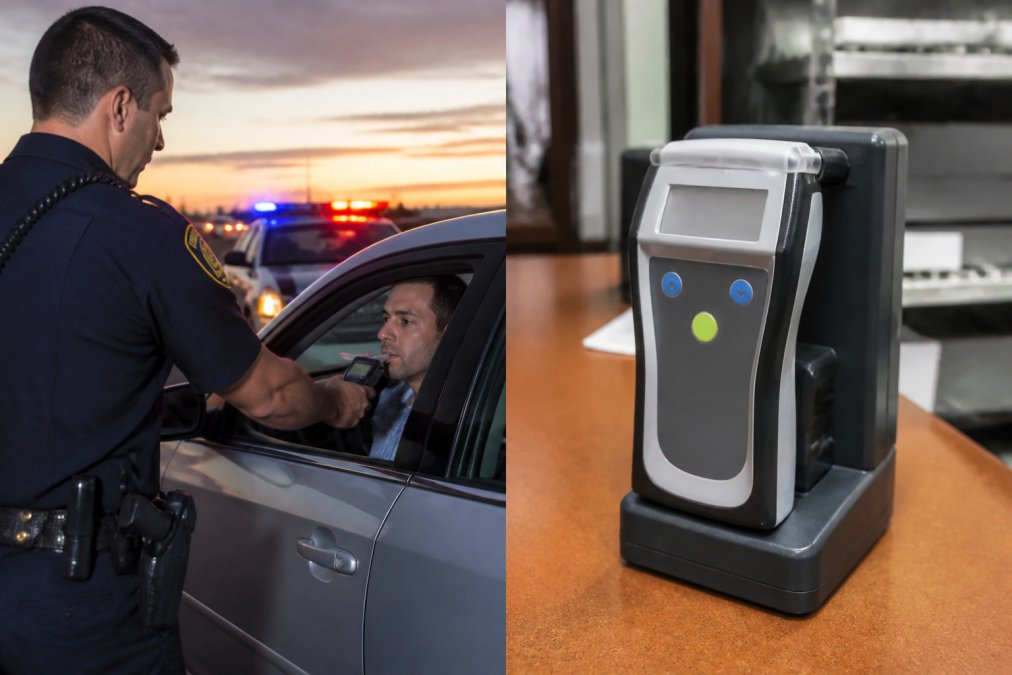
Police conduct two different breath tests during a DUI investigation, and the distinction between them matters significantly for your defense strategy. The preliminary alcohol screening (PAS) test is the handheld device officers use roadside during the initial traffic stop, before formal arrest. The evidentiary breath test is the larger machine at the station, conducted after arrest, and its results are admissible in court.
The PAS is optional before arrest. You can refuse it without triggering the automatic license suspension that refusal of the evidentiary test causes. Many defense attorneys advise clients to refuse the PAS because it’s less reliable and its results can be challenged more easily. However, refusing the PAS may give the officer additional grounds to suspect impairment and proceed to arrest.
The evidentiary breath test is different. This is the test you’ve already consented to under implied consent law. Refusing this test, the one conducted at the station after formal arrest, activates the automatic administrative penalties. This is where the distinction becomes legally significant. You can refuse the PAS without major consequences, but refusing the evidentiary test at the station creates a separate criminal charge and automatic license suspension.
Understanding this distinction helps explain why some people refuse the roadside test but face severe penalties anyway. Officers sometimes don’t clearly explain that they’re asking for the evidentiary test, not just the preliminary screening. The confusion doesn’t matter legally, refusing the evidentiary test carries the penalties regardless of whether you understood the difference.
Automatic License Suspension and DMV Administrative Per Se Hearing
The moment you refuse a breathalyzer test after arrest, your license suspension begins immediately, not after a court hearing, not after conviction, but right then. California law mandates automatic license suspension for refusal, separate from any criminal penalties. This administrative action happens through the DMV, not the criminal court system.
Your license is suspended for one year if this is your first refusal offense (dmv.ca.gov). The suspension is effective immediately, though you can request a temporary driving permit to maintain limited driving privileges while you challenge the suspension. The temporary permit typically allows driving to and from work, school, or medical appointments, but this depends on the specific circumstances the DMV approves.
The DMV administrative per se hearing is your opportunity to contest the suspension. You must request this hearing within 10 days of arrest, or you lose the right to challenge it (dmv.ca.gov). At the hearing, the DMV examines whether the officer had probable cause to arrest you and whether you were lawfully arrested. The hearing focuses on the legality of the arrest itself, not whether you were actually impaired.
Many people don’t realize they can challenge the suspension through this administrative process. The hearing gives you a chance to cross-examine the officer about how the arrest was conducted. If the officer didn’t have probable cause or didn’t follow proper procedures, the hearing officer can set aside the suspension. This is distinct from the criminal case, you can win the DMV hearing and still face criminal charges, or vice versa.
You have only 10 days from arrest to request a DMV administrative per se hearing. Missing this deadline means automatic license suspension without any opportunity to challenge it. This deadline is absolute, there’s no extension or second chance.
Criminal Penalties for Refusal Under California Vehicle Code 23612
Refusing a breathalyzer test is itself a crime under California Vehicle Code 23612. This isn’t just an administrative penalty, it’s a criminal offense with jail time, fines, and probation. A refusal conviction carries harsher penalties than a DUI conviction in many cases, which is why understanding this distinction is crucial.
For a first-time refusal, you face up to six months in county jail, fines, and mandatory probation (leginfo.legislature.ca.gov). The court has discretion on whether to impose jail time, but the possibility exists. Second and subsequent refusals carry increasingly severe penalties. A second refusal within 10 years can result in up to one year in jail. These aren’t minor infractions, they’re criminal convictions that go on your permanent record.
The refusal enhancement means that if you’re convicted of both DUI and refusal, you face cumulative penalties. You’re not choosing between one or the other, you can be convicted of both crimes arising from the same incident. This stacking of charges significantly increases the total penalties you face. Some prosecutors aggressively pursue refusal charges because they carry mandatory minimum penalties that judges cannot reduce.
Court-ordered probation following a refusal conviction typically lasts three to five years. During probation, you must comply with conditions including DUI education programs, possible counseling, and regular check-ins with a probation officer. Violating probation conditions can result in additional jail time and extended probation.
Can Police Force a Blood Test After You Refuse
The question of forced blood draws is one of the most misunderstood aspects of DUI law. Police cannot force a blood test simply because you refused a breathalyzer. They need a search warrant, and obtaining that warrant requires showing probable cause to a judge. The legal standard is high, and not every DUI arrest results in a forced blood draw.
If an officer wants to compel a blood test after you refuse the breathalyzer, they must go before a judge and request a warrant. The officer must present evidence establishing probable cause that you were driving under the influence. The judge then decides whether sufficient grounds exist to authorize the blood draw without your consent. This process takes time, and it’s not automatic.
In practice, some officers do obtain warrants for blood draws after refusal. If they do, you’re required to submit to the blood test. Refusing a court-ordered blood draw is a separate offense with its own penalties. However, the blood draw obtained through a warrant is conducted under more controlled conditions than a roadside breath test, which can sometimes benefit your defense if the sample was mishandled.
The critical point is that a search warrant requirement exists. Police cannot simply force blood draws on a whim. They need judicial authorization. This distinction matters because it means you have a potential legal challenge if the warrant was improperly obtained or if the officer lacked sufficient probable cause. An experienced defense attorney can examine whether the warrant process was followed correctly.
How Refusal Impacts Your DUI Court Case
Refusing a breathalyzer test significantly impacts how your DUI case proceeds in criminal court. The refusal itself becomes evidence that prosecutors use to suggest consciousness of guilt, the theory that you refused because you knew you were impaired. This is legally problematic because it shifts focus from actual evidence of impairment to your decision to refuse testing.
Without breath test results, prosecutors must rely on other evidence: field sobriety tests, officer observations, witness statements, and any blood test results if one was obtained. This can actually work in your favor because field sobriety tests are subjective and often challenged successfully. However, prosecutors also use the refusal as circumstantial evidence of guilt, which is why the refusal decision has broader implications than just the administrative penalty.
The refusal is admissible in the criminal trial. Prosecutors argue that you refused because you knew the test would show impairment. Your defense attorney must counter this narrative by explaining that refusal is a legal right and that choosing not to incriminate yourself is not an admission of guilt. The argument requires skilled presentation because juries sometimes assume refusal means guilt.
Blood test results, if obtained through warrant, become the primary chemical evidence. These results are often more reliable than breath tests and can be analyzed more thoroughly. However, blood tests also create opportunities for defense challenges regarding how the sample was collected, stored, and analyzed. The absence of breath test results means the case depends more heavily on these other forms of evidence.
What to Do If You’re Pulled Over
If you’re pulled over on suspicion of DUI, your immediate actions set the stage for everything that follows. First, remain calm and polite with the officer. Anything you say can and will be used against you, so keep responses brief and avoid volunteering information. You have the right to remain silent, exercise it.
When the officer asks you to perform field sobriety tests, understand that these are voluntary. You can decline them. Many defense attorneys advise refusing field sobriety tests because they’re subjective and the officer is essentially gathering evidence against you. Refusing these tests doesn’t trigger the same automatic penalties as refusing a chemical test, so declining is often strategically sound.
If the officer arrests you and requests a breath test at the station, this is the evidentiary test covered by implied consent law. Before you decide whether to submit, ask to speak with an attorney. You have the right to counsel, and this is the moment to exercise it. An attorney can advise you on the specific circumstances of your case and help you understand the consequences of refusal versus submission.
The decision to refuse or submit to the evidentiary breath test is complex and depends on factors only your attorney can evaluate. Some cases benefit from refusing because it eliminates chemical evidence prosecutors can use. Other cases benefit from submission because the results might be lower than expected or challengeable. This is not a decision to make alone during a stressful arrest, it’s a decision to make with legal counsel.
If you’re facing DUI charges or have already refused a breathalyzer test, the decisions you make now will affect your future significantly. The consequences extend beyond license suspension to criminal conviction, jail time, and a permanent record. At Naderi Law Office, Inc., we understand the complexity of DUI refusal cases and the importance of aggressive defense strategies. Our team of seasoned attorneys is available 24/7 to evaluate your case, explain your options, and protect your rights throughout the process. Contact us today for a free case evaluation and secure the experienced legal representation you need.
Frequently Asked Questions
Is refusing a breathalyzer worse than a DUI conviction?
Refusing a breathalyzer carries severe consequences separate from a DUI conviction. A refusal results in automatic license suspension through the administrative per se process and enhances criminal penalties if you're convicted. However, refusal can complicate prosecution because the prosecution loses direct chemical evidence. An experienced criminal defense attorney can evaluate whether refusal helped or hurt your specific case and develop a strategy accordingly.
Can police force you to take a blood test after you refuse a breathalyzer?
Police can obtain a blood test after refusal, but only with a warrant or in limited circumstances. If an officer has probable cause and obtains a search warrant from a judge, they can compel a blood draw. Some situations may allow a warrantless blood test, such as when a serious injury or death occurred. However, warrantless blood draws face legal challenges. Consult an attorney immediately if police attempt to force a blood test without your consent.
What are the license suspension penalties for a first-time breathalyzer refusal?
A first-time refusal triggers automatic license suspension through the DMV administrative per se hearing process. The suspension period and specific terms depend on your driving history and the circumstances. The DMV hearing gives you an opportunity to challenge the suspension, but you must request it within 10 days of arrest. An attorney can help you prepare for this hearing and protect your driving privileges.
How does refusal affect a DMV administrative per se hearing?
The DMV administrative per se hearing is a separate civil proceeding from any criminal DUI case. Refusal is the central issue at this hearing. The DMV must determine whether the officer had probable cause to stop you, reasonable cause to believe you were driving under the influence, and whether you refused a chemical test. Winning at the DMV hearing can prevent license suspension. An experienced attorney can challenge the evidence and cross-examine witnesses to protect your driving privileges.
This article was written using GrandRanker