
Table of Contents
- Does Self-Defense Apply to Bar Fights?
- Reasonable Force vs Excessive Force in Self-Defense
- The Duty to Retreat and When It Applies
- Assault and Battery Charges and Self-Defense Claims
- Proving Self-Defense in Court
- Common Mistakes That Undermine a Self-Defense Claim
- Why You Need Legal Representation for Bar Fight Charges
- Frequently Asked Questions
Last Updated: August 30, 2026
Does Self-Defense Apply to Bar Fights?
Self-defense does apply to bar fights, but the legal protections are narrower than many assume. Courts examine whether your specific actions met the legal standard for justified force, scrutinizing circumstances before, during, and after the confrontation. A successful self-defense claim requires proving several elements simultaneously, and missing even one undermines your entire defense.
At Naderi Law Office, Inc., we’ve defended clients facing assault and battery charges from bar altercations. The difference between acquittal and conviction often comes down to how well your attorney reconstructs what happened and how credibly you can argue your response was proportional to the threat you faced.
The moment alcohol enters the picture, self-defense claims become harder to prove. Judges assume impaired judgment affected your perception of threat and your choice of response. Document everything immediately after the incident: injuries, witness contact information, and a clear timeline of events before speaking to anyone else.
Reasonable Force vs Excessive Force in Self-Defense
Reasonable force means you used only the amount of force necessary to stop an immediate threat. Excessive force means you used more than required, or continued after the threat ended. A single punch after someone has backed away, or a follow-up strike after they’ve fallen, can transform justified response into criminal assault.

Consider this scenario: someone shoves you hard into the bar counter. You shove back to create distance. That’s likely reasonable force. But if you then throw a punch as they’re stumbling backward, you’ve crossed into excessive force territory. Once the threat stops, your right to use force stops. Many defendants lose self-defense claims not because they didn’t face a genuine threat, but because they kept fighting after it ended.
The burden falls on you to prove your force was reasonable. Witnesses help enormously, if bystanders testify the other person was still advancing when you responded, that strengthens your claim significantly.
Continuing to strike someone after they’ve clearly retreated or fallen is the single biggest factor that transforms a self-defense claim into an assault conviction. The law requires you to stop using force the moment the threat ends.
The Duty to Retreat and When It Applies
The law in most jurisdictions requires you to retreat if you can do so safely (nolo.com). This doesn’t mean running at the first sign of conflict, it means that if you have a safe opportunity to leave without greater danger, the law expects you to take it. If you don’t, prosecutors will argue you chose to fight rather than defend yourself.
In a bar setting, retreat is often possible. You can walk away, move to another part of the bar, or leave the building. The fact that you didn’t weakens your self-defense claim considerably. A jury will wonder: if you could have left safely, why didn’t you?
The duty to retreat has important exceptions. If someone blocks your exit or leaving puts you in greater danger, you may have no realistic opportunity to retreat. If you’re cornered or trapped, you can stand your ground. Your attorney’s job includes reconstructing the physical layout of the bar and establishing whether exits were actually available to you at the moment of conflict.
Assault and Battery Charges and Self-Defense Claims
When a bar fight results in criminal charges, they typically come as assault and battery charges. Battery is the actual physical contact; assault is the threat of imminent harm or attempt to cause harm (justice.gov).
Self-defense is a complete defense to both charges. If you prove you used reasonable force to stop an immediate threat, the charges disappear. But you must prove you were acting in self-defense, the prosecution doesn’t have to disprove your claim.
When you raise a self-defense claim, you’re admitting you committed the physical act alleged. You’re saying you had a legal right to do it. The prosecution then must prove beyond reasonable doubt that your claim is false. In bar fight cases, witness testimony becomes critical. If credible witnesses saw the other person throw the first punch or make a clear threat, your self-defense claim strengthens considerably.
The charge can range from misdemeanor to felony depending on injury severity and circumstances. A bar fight resulting in minor bruising might be misdemeanor; one causing broken bones or head trauma can be felony assault (nij.ojp.gov).
Self-defense is a complete legal defense to assault and battery charges, but you must prove it. The prosecution doesn’t have to disprove your claim; you must establish it with evidence and credible witnesses.
Proving Self-Defense in Court
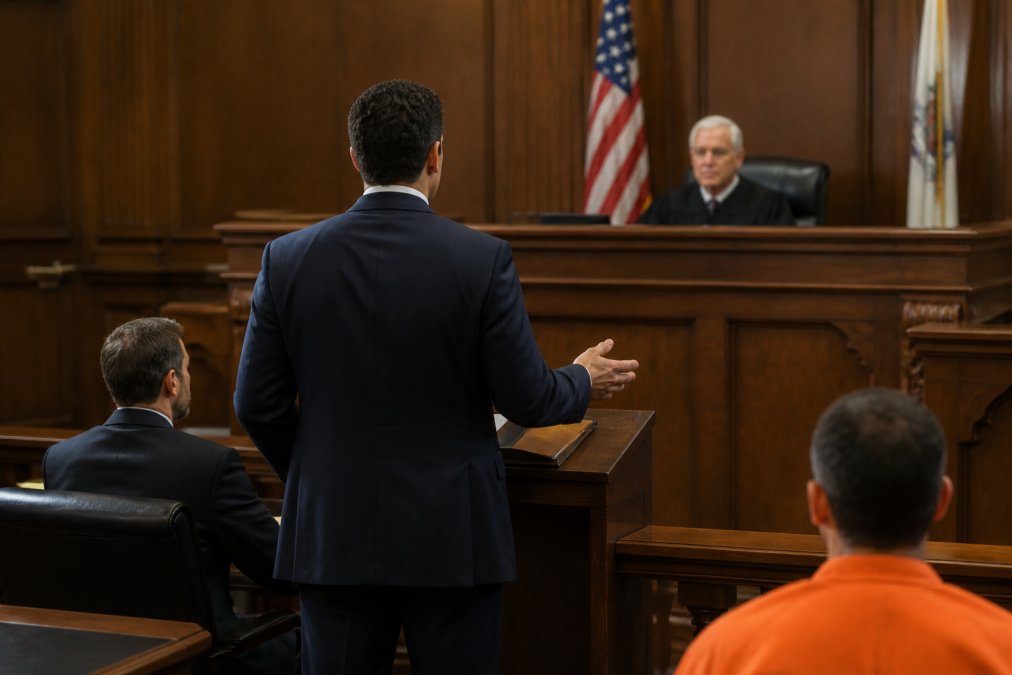
Proving self-defense requires more than your testimony. You need evidence corroborating your version of events. The strongest evidence is witness testimony establishing who was the initial aggressor, what threats were made, and whether your response was proportional.
Medical evidence supports your claim. Injuries, bruises, cuts, and defensive wounds suggest you were fighting back, not initiating. Photographs taken immediately after the incident are powerful. Hospital records carry weight with a jury.
Video footage is invaluable. Many bars have security cameras. If footage shows the other person throwing the first punch or making an aggressive move, that essentially proves your self-defense claim. Your attorney should immediately request all video evidence through discovery.
The police report is often one-sided. Your attorney must challenge its accuracy and present contradicting evidence. Text messages, social media posts, or communications showing the other person threatened you beforehand support your claim.
Common Mistakes That Undermine a Self-Defense Claim
The first mistake is talking to police without an attorney. Police are trained to get statements contradicting self-defense claims. Exercise your right to remain silent.
The second mistake is leaving the scene. It suggests you knew you’d done something wrong. Stay at the scene and cooperate only as your attorney advises.
The third mistake is not documenting your injuries. Take photographs immediately and get medical attention even for minor injuries. Medical records become official evidence of your condition.
The fourth mistake is not identifying witnesses. Get names and contact information before leaving. Don’t rely on police to track them down later.
The fifth mistake is posting about the incident on social media. Anything you post can be twisted by the prosecution. Let your attorney handle all communication about the case.
The sixth mistake is accepting a plea deal without understanding your self-defense options. Many people plead guilty without realizing they had a strong self-defense claim. Early consultation with an experienced criminal defense attorney is critical.
Why You Need Legal Representation for Bar Fight Charges
Bar fight cases are legally complex and factually contested. Prosecutors approach them with assumptions: alcohol was involved, judgment was impaired, and self-defense claims are often lies. Your attorney’s job is challenging these assumptions with evidence.
An experienced criminal defense attorney knows how to investigate these cases, what evidence to request, which witnesses to interview, and how to reconstruct the incident. They understand the specific legal standards in your jurisdiction and know how judges and prosecutors approach these cases.
At Naderi Law Office, Inc., we investigate thoroughly, challenge the prosecution’s evidence, and build the strongest possible self-defense claim based on your case’s facts. We’re available 24/7 and offer a free case evaluation so you can understand your situation without financial pressure.
The stakes are real. A conviction affects employment, professional licenses, housing, and your future. A proven self-defense claim eliminates these consequences entirely.
Anyone facing assault or battery charges from a bar altercation needs immediate legal consultation. An experienced criminal defense attorney can evaluate your case, identify supporting evidence, and build the defense strategy most likely to result in acquittal.
If you’ve been charged with assault, battery, or any criminal offense from a bar fight, contact Naderi Law Office, Inc. today. We understand the legal complexities of self-defense claims and are committed to protecting your freedom and future. Effective representation requires immediate investigation and evidence preservation. Our team works aggressively to challenge the prosecution’s case and build the strongest possible defense. We offer a free case evaluation and are available 24/7 to answer your questions. Call us now to discuss your case.
| Element of Self-Defense | What You Must Prove | Common Challenge in Bar Cases |
|---|---|---|
| Immediate Threat | Other person posed genuine, imminent danger to you | Prosecution argues you escalated or misperceived threat |
| Reasonable Force | Force used was proportional to the threat | Prosecution claims you used excessive force or continued after threat ended |
| No Initial Aggression | You didn’t start the fight or provoke the other person | Prosecution presents evidence of your aggressive statements or actions |
| Duty to Retreat | You couldn’t safely leave the situation | Prosecution argues exits were available and you chose to fight |
| Proportionality | Your response matched the level of threat | Prosecution emphasizes severity of injuries you caused |
Frequently Asked Questions
What counts as “reasonable force” in a bar fight? Reasonable force is the minimum amount of physical contact necessary to stop an immediate threat. A single punch to create distance might be reasonable. Continued strikes after someone has retreated are not. The law requires you to stop using force the moment the threat ends.
Can I claim self-defense if I threw the first punch? Yes, but only if the other person made a clear threat that made you reasonably believe you were in immediate danger. Throwing the first punch makes the claim much harder to prove. You’d need strong evidence that the other person’s words or actions created a genuine threat.
Do I have to leave a bar if someone is being aggressive? Legally, yes, if you can leave safely. The duty to retreat requires you to avoid physical confrontation if a safe exit exists. Choosing to stay and fight weakens your self-defense claim.
What evidence helps prove self-defense in court? Witness testimony is strongest. Video footage is invaluable. Medical records documenting your injuries, photographs of bruises or cuts, police reports, and communications showing the other person threatened you all support your claim.
Should I talk to police about a bar fight? No. Exercise your right to remain silent. Tell police you want to speak to an attorney first, then contact a criminal defense lawyer immediately.
Frequently Asked Questions
Can you use self-defense as a legal defense for a bar fight?
Yes, self-defense can be a valid legal defense for a bar fight if you meet specific requirements: you reasonably believed you faced imminent threat of harm, you used only the amount of force necessary to stop that threat, and you did not initiate the confrontation unlawfully. However, the circumstances matter greatly. Courts examine whether the threat was genuine, whether your response was proportional, and whether you had an opportunity to retreat or escape safely. An experienced criminal defense attorney can evaluate whether self-defense applies to your specific situation.
What counts as reasonable force versus excessive force in a bar fight?
Reasonable force is the minimum force needed to stop an immediate threat. In a bar fight, this might include pushing someone away, blocking a punch, or striking back to create distance. Excessive force goes beyond what was necessary, for example, continuing to strike someone after they stop attacking, using a weapon when fists would suffice, or striking someone who is already incapacitated. Courts evaluate reasonableness based on what a reasonable person in your position would have done, considering the threat’s severity, your size relative to the attacker, and whether weapons were involved.
Do you have to try to leave a bar fight before using self-defense?
California law does not require you to retreat from a threat before using self-defense, even in a bar setting. You have the right to stand your ground and defend yourself without first attempting to escape. However, if you had a safe opportunity to retreat and chose to stay and fight instead, this fact can be used against you in court. The question becomes whether your use of force was truly necessary or whether you could have safely avoided the confrontation. Your attorney can argue whether retreat was actually possible given the circumstances.
What evidence do I need to prove self-defense in court?
To prove self-defense, you need evidence showing: (1) you faced an imminent threat of harm, (2) you reasonably believed force was necessary to stop that threat, and (3) you used only the force needed. Evidence includes witness statements, security camera footage, your injuries, the other person’s size and weapons, text messages or statements showing prior threats, and expert testimony about what force was reasonable. Medical records documenting your injuries strengthen your claim. Your defense attorney will gather and present this evidence to establish that your actions were justified under the law.
This article was written using GrandRanker