
Table of Contents
- Why Your Professional License Is at Risk During a Criminal Case
- Immediate Steps to Protect Your Professional License After an Arrest
- Reporting Criminal Charges to Your Licensing Board: Requirements and Strategy
- The Professional License Disciplinary Hearing Process Explained
- How Criminal Defense Strategy Protects Your Professional Standing
- Expungement for Licensed Professionals: Rebuilding After Conviction
- Frequently Asked Questions
Last Updated: September 18, 2026
Why Your Professional License Is at Risk During a Criminal Case
A criminal arrest doesn’t just threaten your freedom, it threatens your livelihood. If you hold a professional license, a criminal charge creates a second legal battle that runs parallel to your criminal defense, threatening your professional license during criminal case proceedings. Licensing boards operate independently from criminal courts, which means a conviction (or even an arrest) can trigger disciplinary action that proceeds on its own timeline, with its own evidence standards, and its own consequences.
Criminal law and professional licensing operate under different standards, evidence rules, and timelines. A plea deal protecting your freedom might devastate your license, and a criminal defense strategy that works in court might damage your standing with the board. You need both defenses working together from day one.
At Naderi Law Office, Inc., we represent individuals facing criminal charges in Los Angeles County. We understand that protecting your professional license during criminal case proceedings requires aggressive criminal defense paired with strategic mitigation for the licensing board. The sooner you act, the better your options.
Immediate Steps to Protect Your Professional License After an Arrest
The window of opportunity begins during the investigation phase, before charges are formally filed. Understanding both timelines is essential to protecting your license.
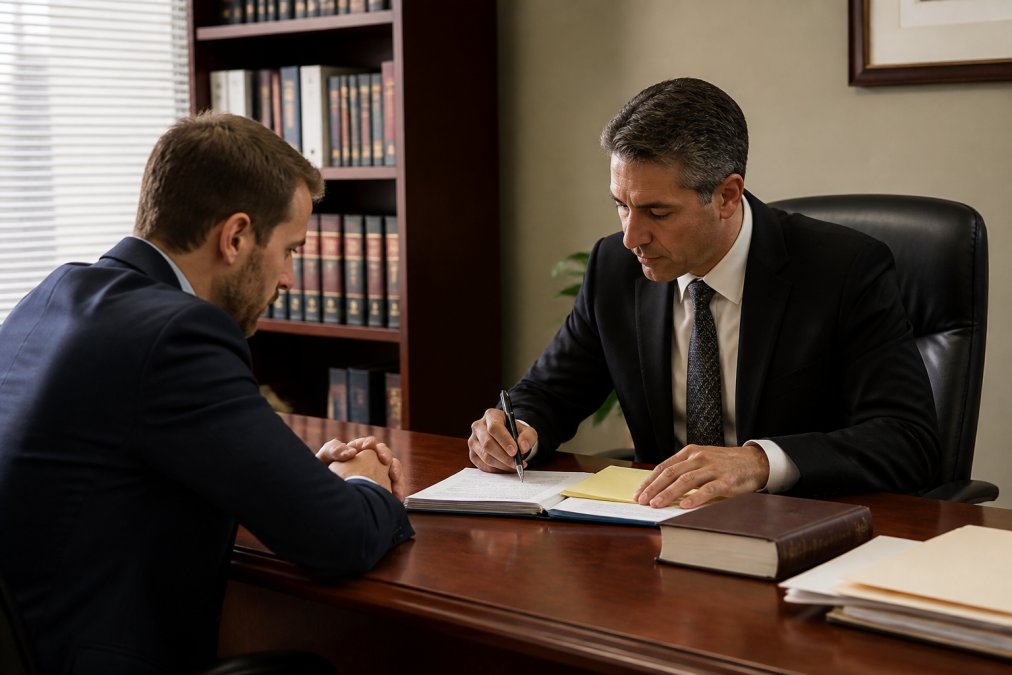
Pre-Charge Mitigation: The Overlooked Opportunity
If you learn you are under investigation before charges are filed, you have a narrow but powerful window to influence the outcome, one often overlooked by professionals focused solely on the criminal threat.
During investigation, before charges are filed:
- Contact a criminal defense attorney immediately, as soon as you learn you are under investigation. Do not speak to investigators without counsel present. Anything you say can be used in both the criminal case and the licensing board proceeding.
- Do not contact the licensing board voluntarily, self-reporting is required only after charges are filed. Voluntary disclosure during investigation creates a paper trail and alerts the board to a problem that might otherwise remain confidential.
- Preserve all evidence of professional competence, gather performance reviews, client testimonials, letters of recommendation, and evidence of continuing education.
- Assess the strength of the investigation, your attorney can often determine whether the investigation is serious or exploratory, helping you prepare.
- Consider proactive mitigation if appropriate, in some cases, you can take steps that demonstrate responsibility and reduce the likelihood of charges. For example, enrolling in treatment before charges are filed shows the prosecutor and licensing board you are taking the matter seriously. This requires careful attorney guidance.
Immediately After Arrest or Formal Charge
Once charges are filed, the timeline accelerates. You typically have 30 days to self-report to your licensing board, and the board’s investigatory clock begins running.
Contact a criminal defense attorney with licensing experience immediately. You need representation that understands both criminal law and the specific licensing board governing your profession, and knows how to structure your defense to minimize damage on both fronts.
When you contact your attorney, provide: the exact charges and case number; your professional license type and issuing board; any prior disciplinary history; whether your license is subject to multi-state compacts; your employment status; and whether you carry professional liability insurance.
Do not make statements to anyone about the charges, not to your employer, colleagues, or on social media. Anything you say can be used in both the criminal case and licensing board proceedings. Let your attorney handle all communication.
Preserve all documents related to your professional conduct, performance reviews, client feedback, letters of recommendation, and proof of continuing education. Do not destroy or alter any documents; destruction of evidence is itself a crime.
Understand your reporting obligations immediately. You have a legal duty to self-report criminal charges to your licensing board. Failing to self-report can result in additional disciplinary action. In most states, the deadline is 30 days from arrest or formal charge, but some boards require notification within 10 days. Your attorney should advise you on timing and strategy.
Notify your professional liability insurer. You are typically required to notify the insurer of criminal charges. Failure to notify can void your coverage. Your insurer may provide a defense attorney, cover defense costs, or cover licensing board disciplinary proceedings. Review your policy immediately and comply with all notice requirements.
Assess the impact on your employment. Criminal charges may trigger mandatory reporting to your employer, suspension, or termination. Your attorney should advise you on your employer’s likely response and whether you should proactively disclose the charges.
Evaluate whether your license is subject to multi-state compacts. A criminal charge may trigger investigations in other states where you hold licenses. Your attorney should immediately identify all states where you are licensed and assess the risk of multi-state discipline.
Document your mental state and decision-making. If the charges involve conduct that seems out of character, begin documenting any mitigating circumstances: mental health issues, substance abuse, medication side effects, or personal crises. This supports both your criminal defense and your licensing board defense.
Reporting Criminal Charges to Your Licensing Board: Requirements and Strategy
Self-reporting a criminal charge to your licensing board is a legal requirement in most professions. Most boards require notification within 30 days of arrest or formal charge. Missing this deadline creates a separate violation. Your attorney must confirm the exact deadline and coordinate the timing and content of your report with your criminal defense strategy.
The Self-Reporting Paradox
Your criminal defense attorney will advise you to remain silent, while your licensing board expects disclosure.
- State the charge(s) and case number only, without admitting guilt or elaborating beyond public record.
- Avoid narrative explanations, do not describe “what happened” in a way that could be used as an admission in criminal court.
- Focus on your professional history and standing, shift the board’s attention to your track record.
- Document mitigation already underway, if you have enrolled in counseling, treatment, or education, say so.
- Use conditional language, “If the allegations are proven” or “In the event of conviction” create distance between the charge and your professional identity.
- Avoid speculation about outcomes, let the criminal case resolve first.
Timing Coordination with Criminal Counsel
What the Board Will Do With Your Report
Self-Reporting Does Not Waive Privilege
The Risk of Over-Disclosure
The Professional License Disciplinary Hearing Process Explained
After the licensing board receives notice of your criminal charge, it enters an investigatory phase separate from your criminal case. The board typically follows these stages: investigation, probable cause determination, administrative complaint, and formal hearing. Early mitigation efforts pay off during investigation. If your attorney can demonstrate your professional competence, community standing, and commitment to your license, the board may recommend closure without formal charges.
How Criminal Defense Strategy Protects Your Professional Standing
Your criminal defense strategy must serve two purposes: protecting your freedom and protecting your license. A plea to a lesser charge might still trigger mandatory license suspension or revocation. Your attorney must evaluate every plea offer against your licensing board’s specific requirements, not just criminal consequences. Moral turpitude charges carry automatic or presumptive license revocation in most professions and require aggressive defense.
Pre-trial mitigation is often overlooked. Before your criminal case resolves, you can begin building a mitigation record that supports your license. This might include:
- Substance abuse treatment (for drug-related charges)
- Mental health counseling (for charges involving anger or judgment)
- Ethics training or professional development
- Community service or volunteer work
- Letters of support from professional colleagues
Expungement for Licensed Professionals: Rebuilding After Conviction
If your criminal case results in conviction, expungement becomes your pathway to license restoration. Expungement is the legal process of sealing or dismissing a criminal record. After expungement, you can legally answer “no” to many questions about criminal history, including questions on licensing board applications and renewal forms.
Frequently Asked Questions
Do I have to report a criminal charge to my professional licensing board?
Most professional licensing boards require self-reporting of criminal charges within a specific timeframe, often 30 days. Failure to self-report can result in additional disciplinary action beyond the original charge. However, reporting requirements vary by profession and jurisdiction. An attorney experienced in professional license defense can advise you on your specific obligations and help you navigate the reporting process strategically to minimize harm to your license.
Can a criminal conviction lead to the automatic revocation of my professional license?
Automatic revocation depends on the crime and your profession. Some convictions for crimes involving moral turpitude or dishonesty can trigger automatic license suspension or revocation, while others allow the licensing board to hold a disciplinary hearing before deciding. Not all criminal convictions result in license loss. A license defense attorney can assess whether your conviction carries automatic consequences and develop mitigation strategies if a hearing is required.
What is the role of a professional license defense attorney during a criminal case?
A license defense attorney coordinates your criminal defense strategy with your professional standing in mind. They work to minimize criminal penalties, negotiate plea agreements that protect your license, and prepare you for licensing board proceedings. They also communicate with your licensing board, present mitigating evidence, and advocate for license retention or reinstatement. This dual focus ensures your criminal defense doesn’t inadvertently harm your professional credentials.
Can an expungement protect my professional license in the future?
Expungement can help restore your professional reputation and improve your eligibility for license reinstatement or renewal, but it does not erase the disciplinary record held by your licensing board. Once a licensing board has taken action against your license, that record typically remains even if the criminal conviction is expunged. However, expungement strengthens your case for reinstatement and demonstrates rehabilitation to the board during future proceedings.
How does a plea deal affect my professional license status?
A plea agreement can significantly impact your license depending on the charges reduced or dismissed and the conviction you accept. Pleading to lesser charges, obtaining a diversion program, or securing deferred adjudication can all preserve your license when compared to conviction on the original charges. An experienced attorney negotiates plea terms specifically to protect your professional standing, not just minimize criminal penalties.
What happens during a licensing board disciplinary hearing?
The disciplinary hearing is a formal administrative proceeding where the licensing board reviews evidence of your alleged misconduct or criminal conduct. You present your case, including mitigating factors and character evidence, while the board determines whether to suspend, revoke, or conditionally reinstate your license. The burden of proof is typically lower than in criminal court. Professional representation is critical to presenting compelling evidence and protecting your due process rights throughout the hearing.