
Table of Contents
- What Happens When You Miss a Court Date
- Understanding Bench Warrants in California
- Immediate Steps to Take After Missing Court
- Filing a Motion to Recall Your Bench Warrant
- Hiring a Criminal Defense Attorney for Missed Court
- How to Check Your Case Status and Court Docket
- Avoiding This Situation: Documentation and Planning
- Frequently Asked Questions
Last Updated: September 24, 2026
What Happens When You Miss a Court Date
A missed court date is serious, the court treats it as a failure to appear with immediate consequences.
When you don’t show up for court, the judge can issue a bench warrant. This is a court order that allows law enforcement to arrest you. You could be picked up at home, work, or anywhere in public. Once arrested on a bench warrant, you go back to jail until a judge decides what happens next.
Beyond the warrant, missing court can result in bail revocation, license suspension, increased fines, and contempt of court charges.
Many people panic after missing court, but quick action and a clear plan reduce the damage.
Understanding Bench Warrants in California
A bench warrant is a court order issued by a judge when someone fails to appear in court. It authorizes police to arrest you and bring you back to court.
In California, law enforcement can execute a bench warrant at any time, during a traffic stop, ID check, or warrant sweep.
Here’s what makes bench warrants dangerous:
- No bail initially. When arrested on a bench warrant, you may be held without bail until the judge decides your fate.
- Immediate consequences. Your license suspension takes effect. Your employer may find out. Your freedom is restricted.
- Compounding charges. Missing court can add contempt of court charges on top of your original case.
- Job and housing impact. An arrest record affects employment, housing, and professional licenses.
The good news is that bench warrants can be recalled. A motion to recall the warrant asks the judge to cancel it. This requires showing the court that you have a valid reason for missing the date and that you’re now committed to appearing.
Immediate Steps to Take After Missing Court
The first hours after realizing you missed court are critical. Panic leads to poor decisions; clarity leads to better outcomes.
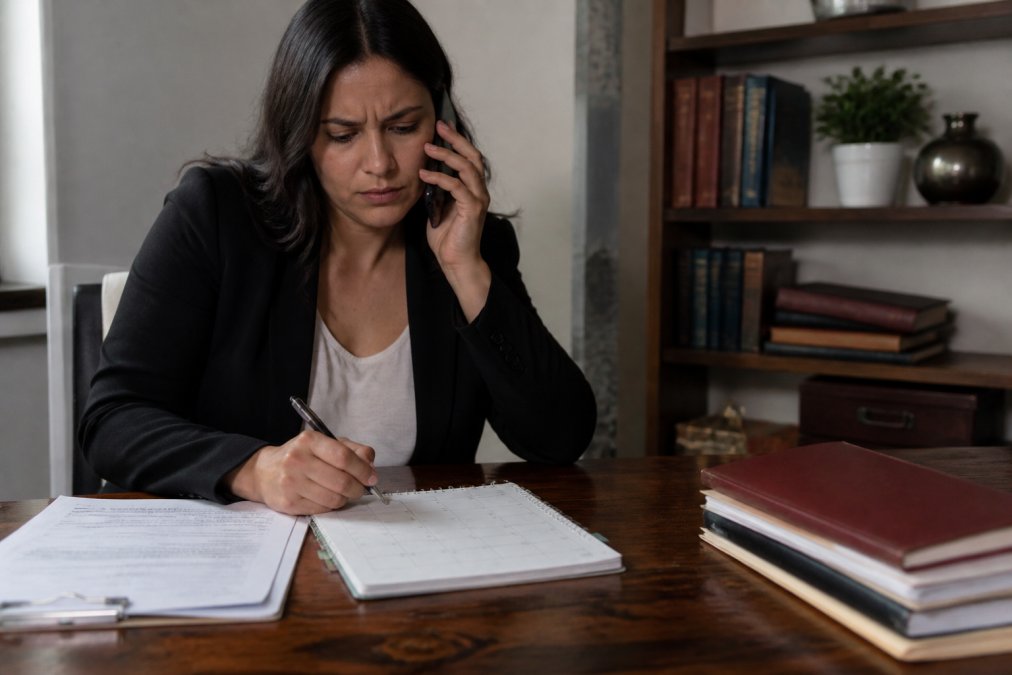
Managing the Panic Response
Panic causes you to avoid the problem, make rash decisions, delay seeking help, and fail to gather evidence. The antidote is structure: breathe, write down your case number and judge’s name, and tell one trusted person. You are not the first person to miss court, the system has a process for this.
The Action Plan: Five Steps in Order
Step 1: Contact a criminal defense attorney immediately.
Call during business hours or leave an urgent voicemail with your name, case number, courthouse, the date you missed, and why. If you cannot afford an attorney, call your local public defender’s office or legal aid organization. Many will see you the same day or next day.
Step 2: Do not contact the court directly without legal advice.
Anything you say can be used against you. Your attorney will contact the court to determine if a bench warrant was issued, get the hearing date you missed, learn about new court dates, and develop strategy.
Step 3: Gather documentation of why you missed court.
Write down the exact reason, date, time, and who was involved. Collect physical evidence: medical records, death certificates, mechanic invoices, employer emails, or daycare notices. Store these in one folder for your attorney.
Step 4: Write a brief statement.
Write one paragraph explaining what happened, factually and unemotionally.
Step 5: Prepare for the conversation with your attorney.
What NOT to Do
- Do not ignore the situation. Bench warrants do not expire. Police can arrest you at any time.
- Do not turn yourself in without an attorney. You need someone negotiating on your behalf.
- Do not post about this on social media. Anything you write online can be used against you in court.
- Do not contact the prosecutor or judge directly. Let your attorney handle all communication.
- Do not flee or change your identity. This turns a misdemeanor into a felony.
- Do not assume you’re guilty. Missing court is not the same as being guilty of the original charge.
The Next 24-48 Hours
Your goal in the first day or two is to:
- Hire or request a public defender (done)
- Meet with your attorney (schedule this immediately)
- Provide all documentation to your attorney
- Let your attorney file a motion to recall the bench warrant
- Prepare for your next court appearance
Filing a Motion to Recall Your Bench Warrant
A motion to recall is a formal request asking the judge to cancel the bench warrant. It includes your explanation, evidence of the reason, and proof of commitment to appearing. Judges are more likely to recall the warrant if you show genuine remorse, provide solid evidence, and have legal representation.
Hiring a Criminal Defense Attorney for Missed Court
A criminal defense attorney protects your rights by contacting the court about warrant status, negotiating with prosecutors, filing a motion to recall the warrant, and representing you at court.
Understanding the Cost and Your Options
You have several affordable options:
Public Defender (No Cost)
If you cannot afford an attorney, you have a right to a public defender at no cost (guaranteed under the Sixth Amendment). Request one when you appear in court or contact the court clerk. If you qualify (typically household income below 200% of the federal poverty line), the court appoints one at no charge. Public defenders handle missed court cases regularly and know how to file motions to recall warrants, though they may carry heavy caseloads.
Payment Plans and Sliding Scale Fees
Legal Aid Organizations
Comparing Your Options
| Option | Cost | Speed | Caseload | Best For |
|---|---|---|---|---|
| Public Defender | Free | Varies (court-appointed) | High | Low-income individuals; immediate need |
| Private Attorney (Payment Plan) | $500-$3,000+ (installments) | Fast (you choose) | Lower | Those who can afford installments; want more attention |
| Legal Aid Organization | Free or sliding scale | Varies | Moderate | Low-income; specialized cases |
What to Look for in an Attorney
Look for an attorney with:
- Experience with missed court cases. Ask how many bench warrant recall motions they’ve filed.
- Local knowledge of judges and prosecutors in your courthouse.
- Quick availability. Can you speak to the attorney or staff the same day?
- Clear communication in plain language, not legal jargon.
- Aggressive representation that fights for you, not just processes paperwork.
- Free consultation to assess fit before committing.
Acting Now, Paying Later
The biggest mistake people make is waiting to hire an attorney until they have money saved. By then, weeks have passed. The bench warrant is still active. Your case has moved forward without you.
How to Check Your Case Status and Court Docket
Knowing your case status is essential. Many California courts have online case lookup tools, go to the court’s website, enter your case number, and you can see current charges, hearing dates, warrant status, judge assignment, and bail information. If unclear, call the court clerk with your case number. Your attorney can get a full copy of the court docket and explain what each entry means.
Avoiding This Situation: Documentation and Planning
The best solution is prevention. Missing court once teaches a hard lesson. Missing it twice is catastrophic.
Write it down immediately:
- Your phone calendar with a reminder
- A physical calendar on your wall
- A notebook you carry with you
- Your attorney’s contact information
Set multiple reminders:
One reminder isn’t enough. Set reminders for:
- One week before
- Three days before
- One day before
- The morning of the hearing
Confirm the details:
Before the date, confirm:
- The correct courthouse location and address
- The correct time (morning or afternoon)
- The judge’s name
- Your case number
- What to bring (documents, ID, etc.)
Plan your logistics:
Stay in contact with your attorney:
Understand the consequences:
| Prevention Step | Why It Matters | How to Do It |
|---|---|---|
| Write down the date immediately | Prevents forgetting the date | Use phone, calendar, and notebook |
| Set multiple reminders | Catches you even if one reminder fails | Set reminders at 1 week, 3 days, 1 day, and morning of |
| Confirm details beforehand | Ensures you go to the right place at the right time | Call court clerk or attorney to verify |
| Plan transportation | Prevents being late or missing the date | Know the route and allow extra time |
| Stay in contact with attorney | Keeps you informed and accountable | Respond to attorney communications promptly |
Frequently Asked Questions
What happens if I accidentally forgot to go to court?
Missing a court date triggers serious consequences. The judge may issue a bench warrant for your arrest, and you could face additional charges for failure to appear (FTA). Your driver’s license may be suspended, and bail can be forfeited. The sooner you contact a criminal defense attorney and address the missed court date, the better your chances of minimizing these consequences. Do not ignore the situation, take immediate action by reaching out to the court clerk’s office or an attorney.
Can a lawyer help me clear a bench warrant for a missed court date?
Yes. A criminal defense attorney can file a motion to recall the bench warrant on your behalf, which asks the court to withdraw it. To succeed, you’ll typically need to demonstrate a valid reason for missing court and show that you intend to appear. An experienced attorney will present your case persuasively to the judge and help you navigate the legal process. Many judges are willing to recall warrants when a defendant shows responsibility and legal representation.
Will I go to jail if I missed my court date by accident?
Possibly. Missing a court date can result in arrest if a bench warrant is issued. However, the outcome depends on factors like the severity of your original charge, your criminal history, and whether you voluntarily appear or are arrested. An attorney can help you surrender voluntarily, which often results in better treatment than being arrested. Judges may also consider your explanation and mitigating circumstances when deciding whether to impose jail time for the failure to appear.
How quickly should I contact an attorney after missing a court date?
Contact an attorney immediately, ideally within 24 hours. The faster you act, the more options you have. An attorney can determine whether a warrant has been issued, help you file a motion to recall it, and advise you on the best way to address the situation with the court. Many criminal defense firms, including Naderi Law Office, Inc., offer 24/7 availability for urgent situations like this. Waiting only makes the situation worse and limits your procedural remedies.