
Table of Contents
- Understanding Bench Warrant vs Arrest Warrant
- How to Check if You Have an Active Warrant
- The Motion to Quash Warrant in California
- Why Hiring a Criminal Defense Attorney for Warrants Matters
- Steps to Quash a Warrant Without Going to Jail
- Consequences of Ignoring an Outstanding Warrant
- Financial Assistance and Pro Bono Resources
- Frequently Asked Questions
Last Updated: September 22, 2026
Understanding Bench Warrant vs Arrest Warrant
A bench warrant is an order issued by a judge when you fail to appear in court or violate court orders. An arrest warrant is issued when law enforcement has probable cause to believe you’ve committed a crime. The key difference: a bench warrant stems from a failure to comply with court instructions, while an arrest warrant comes from suspected criminal activity.
How to Check if You Have an Active Warrant
The first step is finding out whether a warrant exists in your name. Not knowing won’t make it disappear, it only makes things worse.
You can check for active warrants through several methods:
- Contact the court directly. Call the court clerk’s office in the jurisdiction where you believe the warrant was issued. They can confirm whether a warrant is active.
- Visit the courthouse in person. Walk into the clerk’s office and ask. Bring identification. Many courthouses maintain public records you can access.
- Use online court databases. Many jurisdictions offer searchable warrant databases on their websites. Search by your name and case number if you have one.
- Hire an attorney. A criminal defense attorney can run a comprehensive warrant check across multiple jurisdictions. This is often faster and more thorough.
- Search for warrants in neighboring counties. If you’ve moved or had contact with multiple courts, check nearby jurisdictions too.
The Motion to Quash Warrant in California
Understanding the motion to quash is critical, though rules and filing procedures vary significantly by state. This legal tool can resolve the warrant without immediate arrest, but knowing your jurisdiction’s requirements is essential.
What a Motion to Quash Does
A motion to quash a warrant challenges its validity by arguing it was issued without proper legal grounds or that procedures violated your rights. If successful, the warrant is recalled or dismissed. Unlike turning yourself in, a motion to quash attacks the warrant’s foundation without ignoring underlying charges.
Grounds for Filing a Motion to Quash
You can file a motion to quash a warrant when:
- Lack of probable cause. The affidavit fails to establish probable cause. For example, if it states only that a witness “heard rumors” without corroborating details, that may be insufficient.
- Defective affidavit. The affidavit contains false statements, omits material facts, or was signed by someone without personal knowledge. Material falsehoods can invalidate the warrant.
- Procedural violations. The warrant application violated statutory requirements, the affidavit wasn’t sworn under oath, the judge lacked jurisdiction, or the warrant was issued without authority.
- Stale information. Facts supporting the warrant are so old they no longer establish probable cause. Information older than a few months may be challenged.
- Unconstitutional search or seizure. The warrant or its execution violates Fourth Amendment protections.
- Failure to execute within statutory timeframe. Many jurisdictions require execution within a specific period (often 10 days). An expired warrant may be invalid.
State-Specific Procedural Variations
Rules for filing a motion to quash differ by state. California requires filing before trial, typically within 10 days of arraignment. Federal courts follow Federal Rule of Criminal Procedure 41. New York permits challenges at trial or pre-trial. Texas allows motions under Texas Code of Criminal Procedure Article 38.23. An attorney licensed in your state will understand the filing deadlines, required format, and local court practices that determine success.
Timing and Strategic Considerations
Filing early, before arrest, gives maximum leverage. Once arrested, the motion becomes harder to use effectively because the court’s focus shifts to bail rather than warrant validity. Your attorney will assess whether a motion to quash is strongest or whether negotiating a voluntary appearance is more strategic.
Do not file a motion to quash without an attorney. Procedural mistakes, missing deadlines, improper formatting, or weak legal arguments, can waive your right to challenge the warrant. An experienced criminal defense attorney knows how to present the strongest possible case.
Why Hiring a Criminal Defense Attorney for Warrants Matters
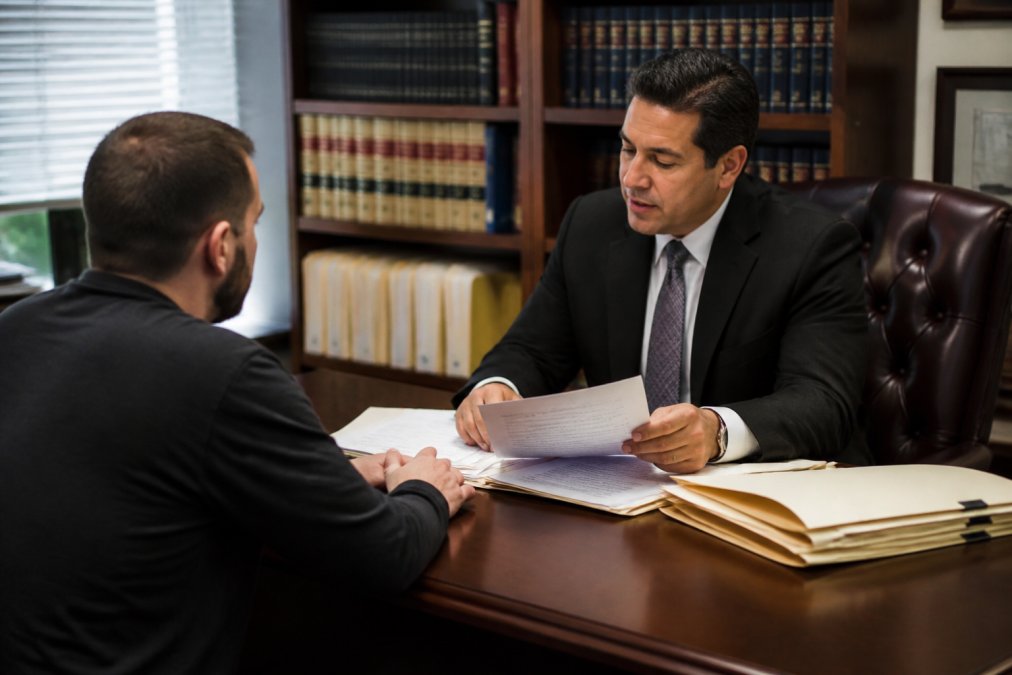
Contact an attorney BEFORE you turn yourself in. A pre-appearance conversation with a prosecutor, arranged by your attorney, can result in conditions that protect your job, your reputation, and your freedom.
Steps to Quash a Warrant Without Going to Jail
Here’s the concrete path forward. These steps assume you’re taking action now, before arrest.
Step 1: Contact a Criminal Defense Attorney Immediately
Call an attorney today. Many offer free consultations. Your attorney will confirm the warrant exists, review charges, assess legal options, and explain risks and benefits. This conversation is protected by attorney-client privilege.
Step 2: Determine the Warrant Type and Underlying Charges
Your attorney will investigate the warrant in detail, pulling the court file and reviewing charges. They’ll determine whether it’s a bench or arrest warrant, identify specific charges, bail amounts, and how long it’s been active. A bench warrant for a missed court date is handled differently than an arrest warrant for a felony.
Step 3: File the Appropriate Motion or Voluntary Appearance
Your attorney will pursue one of these paths: File a motion to quash if the warrant has legal defects. Arrange a voluntary appearance if the warrant is valid but you want to avoid arrest, this shows the judge you’re taking responsibility. Negotiate a surrender arrangement if arrest is likely, your attorney coordinates a specific date and time, often at a police station rather than public arrest.
Step 4: Prepare for Your Court Hearing
If your case goes to a hearing, your attorney will prepare you, develop arguments, gather supporting documents, anticipate prosecutor arguments, and negotiate outcomes. A prepared defendant with an attorney gets better outcomes.
Consequences of Ignoring an Outstanding Warrant
This is what happens when you do nothing.
An active warrant doesn’t expire. It sits in the system, waiting. Every traffic stop, every background check, every interaction with law enforcement triggers it. You could be arrested:
- During a routine traffic stop
- At your workplace
- At your home, in front of family
- At any government office
Ignoring a warrant can result in additional charges like failure to appear or contempt of court. These stack on top of your original charges, making your legal situation exponentially worse.
Financial Assistance and Pro Bono Resources
Not everyone can afford a private attorney. If that’s your situation, multiple pathways exist to get legal help, and in some cases, to resolve your warrant without court involvement at all.
Public Defender’s Office
If you cannot afford an attorney, you have a constitutional right to representation. You can request a public defender by:
- Contacting the public defender’s office in the county where the warrant was issued.
- Completing a financial affidavit that documents your income, assets, and dependents.
- Requesting a determination of indigency.
Law School Clinics and Legal Aid Organizations
Many law schools operate criminal defense clinics staffed by law students supervised by licensed attorneys. These clinics provide free or low-cost representation for warrant cases, often with shorter wait times than public defender offices. To find a clinic near you:
-
Search “[Your State] law school criminal defense clinic” online.
-
Contact the law school’s admissions or student services office.
-
Ask your local bar association for referrals.
-
Search “[Your County] legal aid” or “[Your County] legal services.”
-
Call 211 (a national helpline) and ask for legal aid referrals in your area.
Pro Bono Attorneys and Payment Plans
Some private attorneys take cases for free or at reduced cost. Contact your local bar association’s pro bono program to request a referral. Many bar associations maintain lists of attorneys willing to take warrant cases at no charge or on a sliding scale based on income.
Warrant Amnesty Programs
One of the most overlooked resources is the warrant amnesty program. Many jurisdictions periodically hold “warrant forgiveness” or “amnesty” events where individuals with outstanding warrants can resolve them without arrest or jail time. During these programs:
-
You appear in court voluntarily on a designated date.
-
Charges may be reduced, dismissed, or resolved through a plea agreement.
-
Bail is often waived or significantly reduced.
-
No arrest is made; you’re treated as a voluntary surrender.
-
Contact the district attorney’s office or prosecutor’s office in the county where the warrant was issued.
-
Call the court clerk’s office and ask if amnesty programs are scheduled.
-
Search “[Your County] warrant amnesty program” online.
-
Ask a public defender or legal aid attorney; they’ll know if a program is coming.
Bail Bond Assistance
If you need to post bail to be released after arrest or voluntary appearance, bail bond assistance programs may help:
- Bail funds. Some nonprofits operate community bail funds that pay bail for low-income individuals. Search “[Your State] bail fund” to find local options.
- Bail bond companies. Traditional bail bond companies charge a nonrefundable fee (typically 10% of the bail amount) but allow you to post bail without paying the full amount upfront.
- Release on own recognizance (ROR). Ask the judge to release you without bail based on your ties to the community, employment, and lack of flight risk.
Financial constraints should not prevent you from addressing a warrant. Start by calling your county’s public defender’s office or legal aid organization today. Ask specifically about warrant amnesty programs in your jurisdiction, they may offer the fastest resolution with the least risk. If an amnesty program is available, use it.
Frequently Asked Questions
What is the difference between a bench warrant and an arrest warrant?
A bench warrant is issued by a judge when you fail to appear in court or violate a court order. An arrest warrant is issued based on probable cause that you committed a crime. Both are serious, but an arrest warrant means police believe you committed an offense, while a bench warrant typically stems from your failure to comply with a court directive. Both can result in arrest, and both require immediate legal attention.
Can an attorney appear in court to quash a warrant on my behalf?
Yes. A criminal defense attorney can file motions and appear at hearings on your behalf in many cases. However, for certain warrant proceedings, the judge may require your personal appearance. Your attorney can assess your specific situation and determine whether they can handle the matter without you being physically present. This is one key reason to hire legal representation immediately, to explore all options and protect your interests.
How much does it cost to quash a warrant?
The cost depends on the complexity of your case, the type of warrant, and your attorney’s fee structure. Some attorneys offer flat fees for motion work, while others charge hourly rates. If you cannot afford private counsel, public defenders are available at no cost if you qualify based on income. Many law offices offer free initial consultations to discuss your situation and provide pricing information.
What happens if I ignore an outstanding warrant?
Ignoring a warrant can lead to arrest at any time, during a traffic stop, at your home, or in public. Once arrested, you may be held without bail pending a hearing. An outstanding warrant also damages your employment prospects, housing applications, and professional licenses. The longer you wait, the more serious the consequences become. Acting quickly with legal counsel dramatically improves your options.