
Table of Contents
- Understanding Property Crime Defense
- 1. Lack of Intent Defense
- 2. Mistaken Identity and Ownership Disputes
- 3. Challenging Evidence in a Criminal Case
- 4. Search and Seizure Violations
- 5. Witness Credibility and False Accusations
- 6. Alibi and Presence at the Scene
- 7. Diversion Programs and Restitution Alternatives
- Frequently Asked Questions
Last Updated: October 14, 2026
Understanding Property Crime Defense
When you face charges for a non-violent property crime, the stakes feel enormous. Your freedom, your job, your reputation, all hang in the balance. The good news is that property crime defense strategies exist to challenge the prosecution’s case. At Naderi Law Office, Inc., we help clients navigate these charges and protect their futures through aggressive, personalized defense strategies.
Property crime defense covers theft, burglary, shoplifting, vandalism, trespassing, and similar offenses. These crimes don’t involve violence, but they carry serious penalties. A conviction can result in jail time, fines, probation, and a permanent criminal record that follows you for years.
The key to a strong defense is understanding your options. The prosecution must prove every element of the crime beyond reasonable doubt. If they can’t, you walk free. Here are seven proven defense strategies that work.
1. Lack of Intent Defense
Intent is everything in property crime cases. The prosecution must prove you intentionally committed the crime. If they can’t show intent, the case falls apart.
Lack of intent defense works when you took property or damaged something by accident or mistake. You didn’t mean to do it. Maybe you grabbed someone else’s jacket at a restaurant by mistake. Maybe you didn’t realize you were trespassing on private property. Maybe you damaged something without understanding it wasn’t yours to damage.
This defense requires clear evidence. Documentation helps. Witness statements matter. Text messages, emails, or receipts showing your state of mind can all support lack of intent.
A common mistake is assuming the prosecution will believe your story. They won’t. You need concrete proof. Photos, timestamps, written records, anything showing you didn’t act deliberately.
If you can show you acted without knowledge or intention, the entire charge collapses. The burden of proof rests with the prosecution, not with you.
2. Mistaken Identity and Ownership Disputes
Mistaken identity happens more often than people realize. The witness saw someone commit a crime. The police arrested you. But the witness was wrong.
Mistaken identity defense challenges whether you were actually at the scene. It questions whether the witness correctly identified you. Security footage, alibi witnesses, and timeline evidence all matter here.
Ownership disputes work similarly. Maybe someone accused you of stealing something. But you had permission to take it or use it. You thought it belonged to you. The property’s rightful owner is unclear.
These defenses require solid evidence. Security camera footage is powerful. Cell phone location data helps. Witness testimony from people who were with you matters.
The prosecution often relies on eyewitness testimony. Eyewitnesses make mistakes. They misremember faces. They get confused about details. Your defense attorney can challenge their memory and accuracy through cross-examination.
Eyewitness testimony sounds convincing but is often unreliable. A good defense attorney will expose inconsistencies and weaknesses in the witness’s account.
3. Challenging Evidence in a Criminal Case
The prosecution’s case rests on evidence. Physical evidence, forensic evidence, surveillance footage, witness statements, all of it must be legally obtained and properly handled.
Challenging evidence means questioning whether the evidence is reliable or admissible. A piece of evidence might be:
- Improperly collected
- Mishandled or contaminated
- Lacking proper chain of custody
- Scientifically unreliable
- Obtained illegally
Forensic evidence requires proper testing and documentation. Chain of custody must be unbroken. If the evidence was mishandled, contaminated, or improperly stored, it becomes unreliable. A judge may rule it inadmissible.
Digital evidence and surveillance footage require authentication. The prosecution must prove the video or digital file is what they claim it is. They must show it hasn’t been altered. They must establish when and where it was recorded.
Witness statements can be challenged too. Was the witness credible? Did they have a clear view? Could they have been mistaken? Did they have a reason to lie?
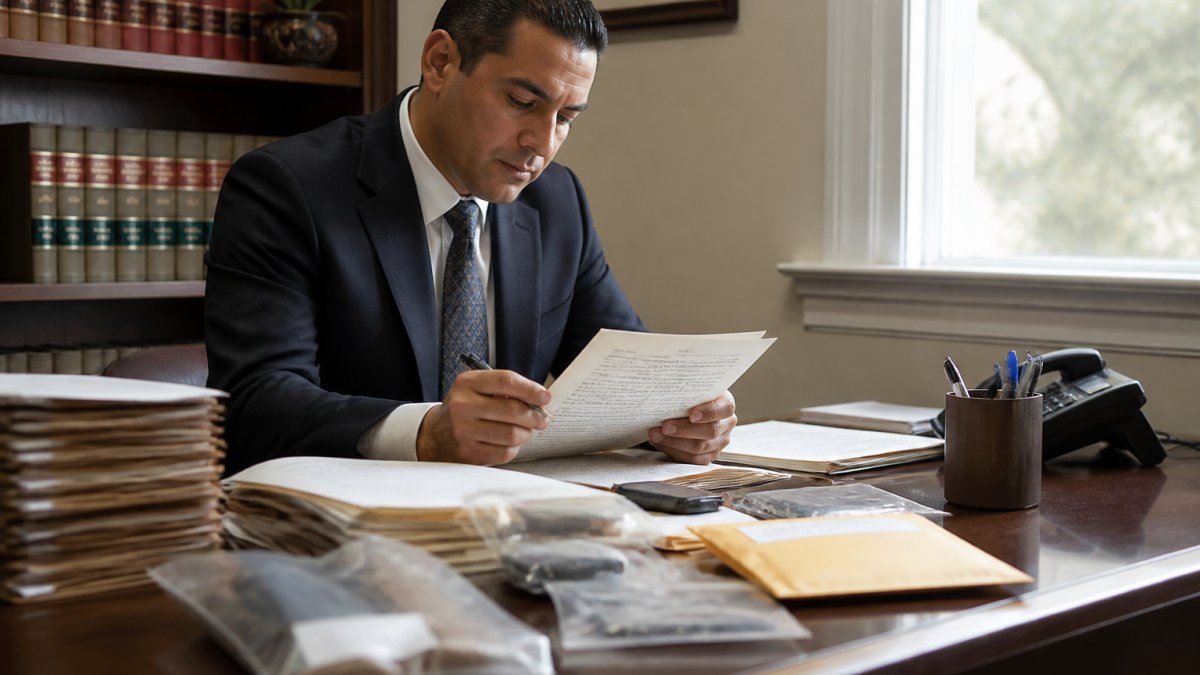
Your defense attorney can file motions to suppress evidence, challenge forensic testing, and cross-examine witnesses about the evidence they collected or analyzed.
4. Search and Seizure Violations
The Fourth Amendment protects you against unreasonable searches and seizures. Police need a warrant to search your property. They need probable cause to arrest you. If they violated your rights, evidence they found becomes inadmissible.
Search and seizure violations happen when:
- Police searched without a warrant
- The warrant was invalid or too broad
- Police lacked probable cause
- The search exceeded the warrant’s scope
- Police seized property without legal authority
If police violated your constitutional rights, your defense attorney can file a motion to suppress the evidence. If the evidence is suppressed, the prosecution’s case weakens or collapses entirely.
Probable cause means police had reasonable grounds to believe you committed a crime. A hunch isn’t enough. A tip from an unreliable source isn’t enough. They need facts supporting their suspicion.
Warrants must be specific. They can’t authorize a general search of your entire home. They must describe what police are looking for and where they can look.
Constitutional violations are your strongest defense tool. If police broke the law to get evidence, that evidence disappears from the prosecution’s case.
5. Witness Credibility and False Accusations
Witnesses can lie. They can misremember. They can have reasons to falsely accuse you.
Witness credibility is central to many property crime cases. The prosecution’s case might rest entirely on one witness’s testimony. If that witness is unreliable, the entire case falls apart.
Your defense attorney can challenge witness credibility by:
- Exposing inconsistencies in their story
- Showing they had a motive to lie
- Proving they had poor visibility or opportunity to observe
- Demonstrating bias or prejudice against you
- Presenting evidence that contradicts their testimony
False accusations happen. Someone might blame you for a crime to protect themselves or someone else. Someone might confuse you with the actual offender. Someone might have a grudge.
A skilled cross-examination reveals these problems. Your attorney asks tough questions. They point out contradictions. They expose bias. They make the jury question whether the witness is telling the truth.
Documentation helps. Text messages, emails, or other records showing the witness had a motive to lie are powerful. Prior statements that contradict their testimony matter.
6. Alibi and Presence at the Scene
If you weren’t at the scene when the crime happened, you didn’t commit it. An alibi defense proves you were somewhere else.
Alibis require solid evidence. A friend’s testimony helps, but it’s stronger if multiple people can confirm your location. Cell phone location data is powerful. Security footage showing you elsewhere is excellent evidence.
Time matters. The prosecution must prove the exact time the crime occurred. If there’s doubt about timing, your alibi becomes stronger.
Documentation strengthens alibis. Credit card receipts, store transactions, work records, and security footage all show where you were and when. Digital timestamps on photos and messages help establish your location.
Your alibi witnesses must be credible. A witness with no bias is more convincing than a close friend or family member. But multiple witnesses, even if related to you, create a strong alibi.
Gather alibi evidence immediately. Cell phone records, receipts, and witness contact information become harder to find as time passes. Act quickly.
7. Diversion Programs and Restitution Alternatives
Sometimes the best defense strategy isn’t fighting the charges in court. It’s working out a deal that protects your future.
Diversion programs allow you to avoid conviction. You complete certain requirements, counseling, community service, restitution, or probation. If you succeed, charges are dismissed.
Diversion programs work best for first-time offenders and less serious charges. They’re faster than trial. They cost less. They keep a conviction off your record.
Restitution means paying back the victim for their loss. If you’re accused of theft, you repay the stolen property’s value. If you damaged property, you pay for repairs. Restitution can be part of a plea deal or a diversion program.
Plea deals involve negotiating with the prosecution. You might plead guilty to a lesser charge. You might negotiate a lighter sentence. You might agree to restitution in exchange for dropped charges.
These alternatives require careful negotiation. Your attorney must evaluate whether the deal is better than going to trial. They must understand the long-term consequences of any plea or agreement.
At Naderi Law Office, Inc., we evaluate every option. We fight aggressively in court when that’s your best path. We negotiate strategically when a deal protects your future better. We are available 24/7 to discuss your specific situation and build the strongest defense possible.
| Defense Strategy | When It Works | Key Evidence Needed |
|---|---|---|
| Lack of Intent | Accident or mistake | Documentation, witness statements, records |
| Mistaken Identity | Wrong person arrested | Security footage, alibi witnesses, location data |
| Challenging Evidence | Evidence improperly obtained | Expert analysis, chain of custody records |
| Search & Seizure | Police violated rights | Warrant analysis, procedure documentation |
| Witness Credibility | Witness unreliable or biased | Cross-examination, contradicting evidence |
| Alibi | You weren’t at the scene | Receipts, footage, multiple witnesses |
| Diversion/Restitution | First offense, less serious crime | Negotiation, program eligibility |
Frequently Asked Questions
Can a lack of intent be a defense to theft or other property crimes?
Yes. Many property crimes require the prosecution to prove intent or knowledge. If you took property without realizing it belonged to someone else, or without intending to permanently deprive the owner of it, this can form the basis of a lack of intent defense. The burden of proof rests with the prosecution to establish your mental state beyond a reasonable doubt. An experienced criminal defense attorney can challenge whether the evidence actually demonstrates the intent the charges require.
Can mistaken identity be a defense to a property crime charge?
Absolutely. Mistaken identity is a powerful defense when the evidence relies on eyewitness testimony, surveillance footage, or circumstantial identification. If you can demonstrate that you were not the person who committed the offense, or that the evidence is insufficient to prove you were present at the scene, the charge may be dismissed or reduced. Digital evidence, witness statements, and alibi evidence all play a role in challenging identification.
What should I do immediately after being accused of a non-violent property crime?
First, exercise your right to remain silent and do not speak to police without an attorney present. Contact a criminal defense attorney immediately, even before your first court appearance. Provide your attorney with all relevant information, including any evidence of your whereabouts, witnesses who can support your account, and any documentation related to ownership or permission. The sooner you secure legal representation, the better positioned your attorney is to investigate the allegations and protect your rights.
How can a lawyer challenge evidence in a property crime case?
Your attorney can challenge evidence by examining the chain of custody, questioning how police collected or stored evidence, filing motions to suppress illegally obtained evidence, cross-examining witnesses about their credibility and observations, and requesting forensic analysis or independent testing. If evidence was obtained without a warrant or probable cause, or if procedures were not followed correctly, it may be excluded from trial. Digital evidence, surveillance footage, and physical evidence are all subject to scrutiny for authenticity and reliability.
Facing a property crime charge is stressful and frightening. You need an attorney who understands these defenses and knows how to deploy them. At Naderi Law Office, Inc., our seasoned attorneys provide aggressive defense strategies tailored to your case. We’re available 24/7 to protect your freedom and minimize penalties. Contact us today for a free case evaluation and get the strong defense you deserve.