
Table of Contents
- Understand Your Rights During a Criminal Investigation
- Contact a Criminal Defense Attorney for Professional License Issues
- How to Respond to a Licensing Board Investigation
- Licensing Board Disclosure Requirements and Your Obligations
- Criminal Conviction Impact on Professional License
- Protect Evidence Integrity and Documentation
- Manage Communications With Employers, Regulators, and Investigators
- Conclusion
- Frequently Asked Questions
Last Updated: October 8, 2026
Understand Your Rights During a Criminal Investigation
A criminal investigation is overwhelming, especially when you need to protect professional credentials criminal investigations threaten. The moment you’re contacted by law enforcement, your choices matter enormously. Understanding your fundamental rights is the first step toward protecting your freedom and your career. (Source: Fifth Amendment of the U.S. Constitution)
You have specific legal protections during any criminal investigation. Knowing them gives you power to act strategically.
Right to remain silent
The right to remain silent is your most powerful tool. You are not required to answer questions from police, investigators, or anyone else.
Many people think cooperating will help their case. It rarely does. Anything you say can and will be used against you in court, and even innocent explanations can be twisted.
Exercise this right clearly and directly. Tell investigators: “I am exercising my right to remain silent. I will not answer questions without my attorney present.” Say this once, then stop talking.
Right to legal counsel
You have the absolute right to an attorney, which kicks in the moment you are arrested or questioning begins. Law enforcement must stop questioning once you ask for a lawyer.
Request an attorney immediately and consistently. Do not answer questions while waiting for your lawyer, and do not make deals without legal counsel present.
If you cannot afford an attorney, the court will appoint one. Do not let financial concerns prevent you from getting representation, your freedom and professional license depend on proper legal defense.
Search warrants and probable cause
Police need a search warrant to search your home, car, or office. A warrant requires probable cause, law enforcement must show a judge good reason to believe evidence of a crime is in that location.
Without a warrant, you can refuse a search. If police search without a warrant or your consent, the evidence may be excluded from court.
If police have a valid warrant, they can search. Do not physically resist, let them search, and your attorney can challenge the warrant’s validity later in court.
Contact a Criminal Defense Attorney for Professional License Issues
The moment you suspect you are under investigation or have been arrested, contact a criminal defense attorney. Do not wait, and do not handle this alone.
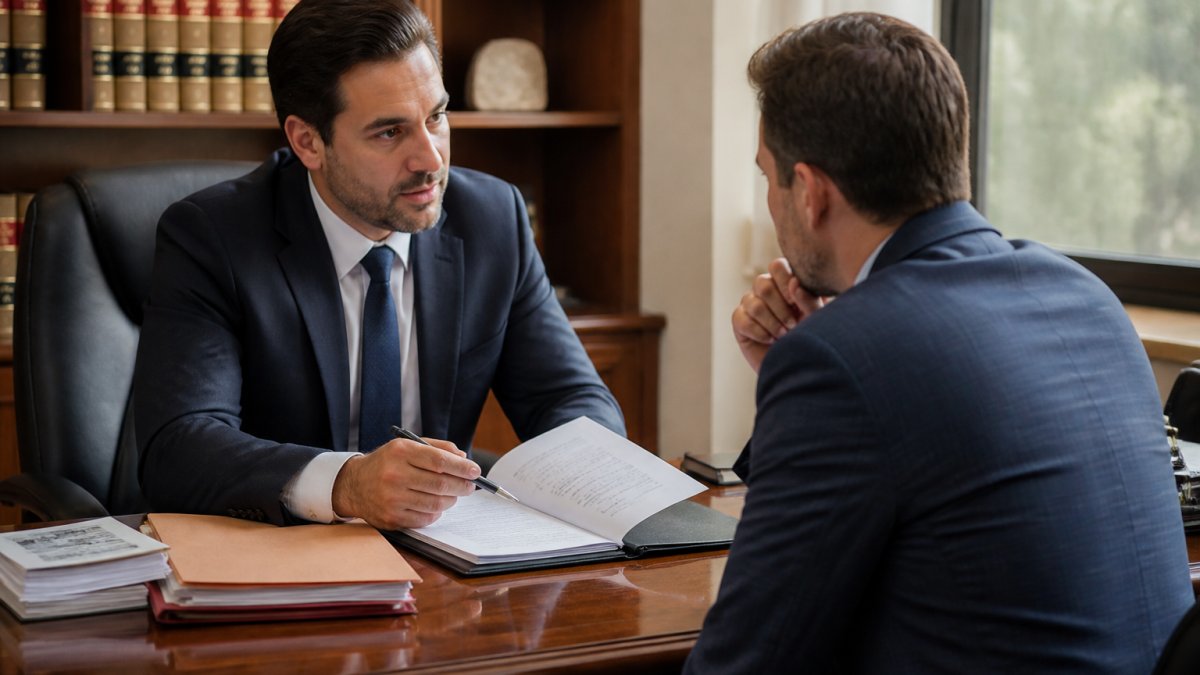
A criminal defense attorney does more than defend you in court; they help protect professional credentials criminal investigations target.
At Naderi Law Office, Inc., we understand the pressure professionals face.
Your attorney will immediately:
- File motions to protect your rights and challenge evidence
- Communicate with prosecutors about your case
- Advise you on what to tell your employer and licensing board
- Begin building a defense strategy tailored to your profession
Do not post about your case on social media, discuss details with friends or family, or contact the alleged victim or witnesses. Your attorney will guide every communication.
How to Respond to a Licensing Board Investigation
A licensing board investigation is separate from criminal prosecution but happens simultaneously. The board investigates whether you violated professional standards; criminal court investigates whether you broke the law. Both carry serious consequences.
Timeline for licensing board notification
Licensing boards typically learn about criminal charges quickly. Many boards have automatic notification systems tied to court filings. Some are notified by law enforcement directly.
Once the board opens an investigation, you will receive formal notice with the allegations and your right to respond. Expect initial contact within weeks of your arrest.
Do not ignore board communications, failure to respond strengthens the case against you.
Your attorney must coordinate your response to the board.
Coordination between law enforcement and licensing boards
Law enforcement and licensing boards share information but operate independently. A criminal acquittal does not automatically clear you with your board, and a board finding does not determine criminal guilt.
This separation is protective: your attorney can use different strategies in each forum. Evidence excluded in criminal court may still be considered by the board, so coordination is essential.
Some boards are more aggressive than others, and a public-safety-focused board may move faster than criminal proceedings. Your attorney must stay ahead of board timelines while defending criminal charges.
Licensing Board Disclosure Requirements and Your Obligations
You have legal obligations to disclose criminal charges to your licensing board. Failing to disclose creates a second violation: dishonesty or fraud.
When disclosure is mandatory
Most boards require you to report a criminal arrest or charge within a set timeframe, typically 10 to 30 days depending on your profession. Some require disclosure only upon conviction; others immediately upon arrest.
Check your board’s specific rules. Your attorney will know the exact requirements for your profession. Missing the disclosure deadline creates a separate disciplinary case.
Disclosure does not mean admitting guilt, it means following your professional obligations. Your attorney will craft a statement that protects your interests while meeting legal requirements.
Consequences of non-disclosure
Failing to disclose a criminal charge is treated as dishonesty by most boards. This violation alone can result in license suspension or revocation, even if the criminal charges are dismissed.
The board sees non-disclosure as a character issue suggesting you cannot be trusted, a perception harder to overcome than the original charge. Disclosure with attorney guidance is always the safer path.
Some professionals try to keep charges quiet, hoping the case resolves first. This backfires: boards investigate thoroughly and discover charges eventually, and the added non-disclosure violation makes everything worse.
Criminal Conviction Impact on Professional License
A criminal conviction does not automatically end your career. The impact depends on the crime, your profession, and how you respond. But conviction creates a serious threat to your license.
Crimes of moral turpitude and disciplinary action
Crimes of moral turpitude involve dishonesty, fraud, or breach of trust and carry the heaviest licensing consequences. Theft, fraud, embezzlement, and similar crimes typically result in license revocation.
Other crimes may result in suspension, probation, or license conditions. Violent crimes, drug offenses, and profession-related crimes are treated seriously by most boards.
The board will evaluate:
- The nature and severity of the crime
- How recent the conviction is
- Your professional history and reputation
- Evidence of rehabilitation
- Public safety concerns (Source: guidance on attorney-client privilege)
Your attorney can present evidence of rehabilitation, character support, and mitigating circumstances. This presentation matters. Some professionals retain their licenses despite convictions through strong rehabilitation evidence.
Rehabilitation and license restoration options
If your license is suspended or revoked, restoration is sometimes possible. The path depends on the crime and the board’s rules. Some boards allow restoration after a set period if you meet conditions. Others are more flexible.
Rehabilitation evidence includes:
- Completion of counseling or treatment programs
- Community service
- Character letters from employers and colleagues
- Stable employment history since conviction
- Compliance with probation terms
- Time elapsed since conviction
Your attorney will build a rehabilitation case as soon as conviction is possible. Starting early improves your chances; waiting years makes restoration harder.
Some boards allow conditional licenses, letting you practice under restrictions while demonstrating rehabilitation and rebuilding trust.
Protect Evidence Integrity and Documentation
Evidence integrity matters in criminal court and before licensing boards. How evidence is collected, stored, and documented affects its admissibility and weight.
Chain of custody and record retention
Chain of custody is the documented history of evidence from collection through trial.
Your attorney will scrutinize the prosecution’s chain of custody. Gaps, missing documentation, or unexplained handling can undermine evidence, especially digital evidence, which degrades or can be altered.
Preserve your own records: emails, text messages, financial records, and anything related to the allegations.
Organize documents chronologically. Create a timeline of events. Label everything clearly. Your attorney will use this documentation to build your defense and respond to board inquiries.
Digital evidence and account preservation
Digital evidence is increasingly critical in criminal cases. Text messages, emails, social media posts, and account activity can support or harm your defense. Preserve everything immediately.
Do not delete accounts, change passwords, or alter digital records. These actions look like consciousness of guilt.
Your attorney may need to preserve evidence from your phone, computer, or accounts, and some cases require forensic examination.
Law enforcement can obtain warrants for digital accounts. Your email, social media, banking records, and phone data are all discoverable, assume nothing is private once an investigation begins.
Manage Communications With Employers, Regulators, and Investigators
What you say to your employer, the licensing board, and investigators shapes your entire case. Strategic communication protects your interests. Poor communication destroys them.
What to say and what to withhold
The safest approach is simple: say nothing without your attorney present. This applies to police, investigators, employers, and board officials.
If your employer asks about charges, confirm you have been arrested and retained counsel and that you are cooperating with the legal process.
To the licensing board, provide required disclosures through your attorney. Do not volunteer additional information or explain, provide what is legally required, nothing more.
To prosecutors, your attorney negotiates on your behalf. You do not communicate directly with the prosecution.
Self-evaluative privilege and work product protection
Self-evaluative privilege protects internal investigations and evaluations from being used against you.
Work product protection shields attorney communications from discovery. These protections are powerful but can be lost if you discuss the case with others.
Do not discuss your case with coworkers, friends, or family, post about it online, or participate in workplace investigations without your attorney present.
Your attorney will advise you on what can be discussed safely. Follow that guidance strictly, privileged communications are essential to your defense.
Conclusion
Protecting your professional credentials during a criminal investigation requires immediate action, strategic thinking, and expert legal guidance. Your first call should be to a criminal defense attorney who understands both criminal law and professional licensing. The decisions you make in the first days and weeks determine whether your career survives.
At Naderi Law Office, Inc., our aggressive defense strategies, 24/7 availability, and personalized approach ensure your case gets the attention it deserves. We coordinate with licensing boards, manage communications, and build defenses tailored to your profession. Contact us today for a free case evaluation.
Frequently Asked Questions
What should I do if a criminal investigation could affect my professional license?
Contact a criminal defense attorney immediately. Your attorney can advise you on disclosure obligations to your licensing board, help you understand the investigation process, and develop a strategy to protect your credentials. Do not communicate with your licensing board, employer, or investigators without legal counsel. Early intervention is critical because some licensing boards require prompt notification of criminal charges, and your attorney can help you navigate this timeline and coordinate your response to both the criminal case and any licensing board inquiry.
Do I have to tell my licensing board about a criminal investigation?
Disclosure requirements vary by profession and state licensing rules. Many licensing boards require notification of criminal charges or arrests within a specific timeframe, often 10 to 30 days depending on your profession. Failure to disclose can result in additional disciplinary action separate from the criminal case. Your criminal defense attorney should review your specific licensing board’s rules and advise you on timing and content of disclosure. Never disclose without legal guidance, as statements to the board can be used against you in both the criminal case and licensing proceedings.
Can a criminal conviction actually result in losing my professional license?
Yes. Licensing boards can discipline or revoke licenses based on criminal convictions, particularly those involving crimes of moral turpitude or crimes directly related to your profession. However, conviction alone does not automatically mean license loss. Your licensing board will consider the severity of the offense, your professional history, and rehabilitation efforts. A criminal defense attorney experienced with professional license issues can work to minimize criminal penalties or present mitigation evidence to your licensing board to preserve your credentials or support license restoration after conviction.
Should I speak to my employer about the criminal investigation without a lawyer?
No. Do not disclose details of a criminal investigation to your employer without consulting your criminal defense attorney first. Your attorney can advise you on what, if anything, your employer has a right to know and how disclosure might affect your employment and professional standing. In some cases, your attorney may recommend strategic disclosure to mitigate workplace consequences; in others, silence is the better approach. Your attorney can also help you understand confidentiality protections and whether your employer is legally required to report the investigation to your licensing board or other regulators.