
Table of Contents
- What to Expect When You Need a Criminal Lawyer
- Criminal Defense Attorney Fees: What You Need to Know
- Questions to Ask a Criminal Defense Lawyer
- Criminal Lawyer Consultation: What Happens Next
- Criminal Defense Lawyer Experience and Track Record
- Charges Your Criminal Lawyer Can Handle
- Why Immediate Legal Representation Matters
- Frequently Asked Questions
Last Updated: October 6, 2026
What to Expect When You Need a Criminal Lawyer
The first hours after criminal charges set the trajectory of your case. One confusion trips up anyone seeking a criminal lawyer glendale: there is a Glendale in California and a Glendale in Arizona, with different courts, procedures, and agencies.
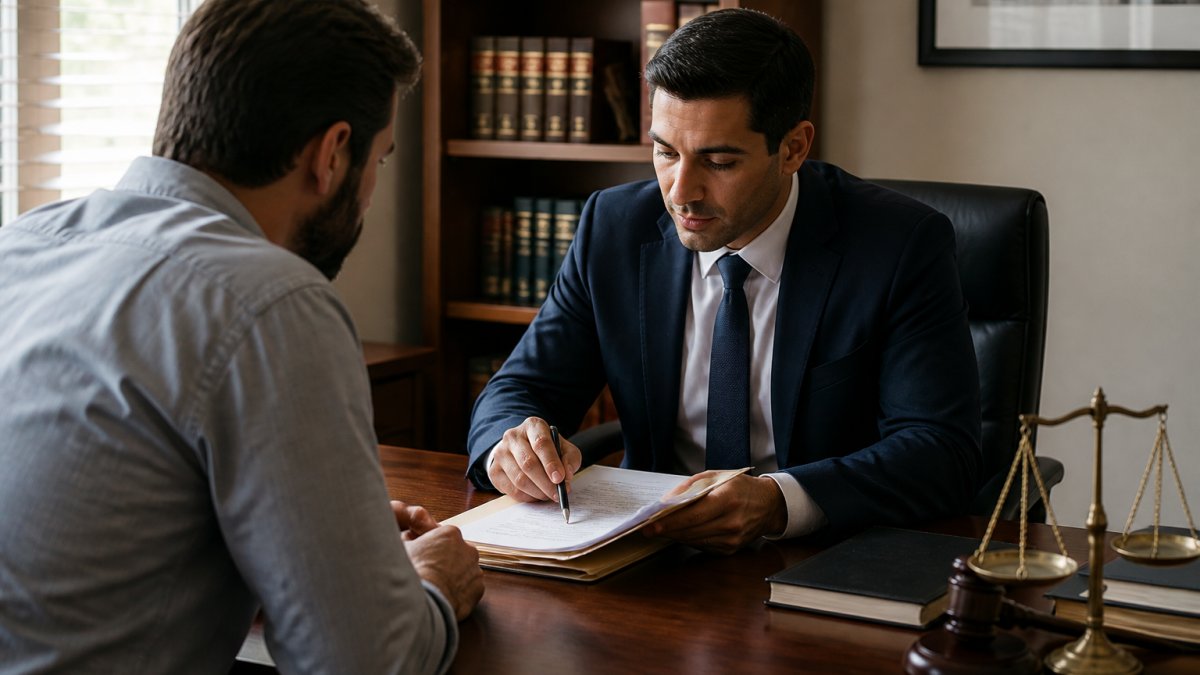
Step 1: Arrest and booking
After arrest, you are taken to a police station or county jail for booking: personal information, photographing, fingerprinting, and a background check.
During booking, officers may ask for consent to search your belongings, vehicle, or phone. You can decline.
Do not discuss your case with cellmates, on jail phones, or in visiting rooms. Calls and messages from custody are recorded, and statements made there can be used against you.
Step 2: The first court appearance (arraignment)
In California, a defendant held in custody generally must be brought before a judge without unnecessary delay, usually within a few court days.
At the arraignment, the judge:
- Reads the charges against you
- Advises you of your rights, including the right to counsel
- Sets bail or release conditions, or releases you on your own recognizance
This is not the moment to plead guilty or negotiate. It is the moment to secure your release and preserve your rights.
Step 3: Bail and release
Bail is set based on the charge, your criminal history, flight risk, and public safety. A defense attorney can argue for release on your own recognizance, reduced bail, or a conditions-based release. If you cannot afford bail, a bondsman typically charges a non-refundable percentage.
Step 4: Arraignment to preliminary hearing or pre-trial
After arraignment, the case moves into pre-trial. Key milestones:
- Discovery. The prosecution must turn over the evidence against you. Your attorney reviews police reports, body camera footage, lab results, and witness statements.
- Preliminary hearing (felony cases). In California, a felony generally proceeds to a preliminary hearing where a judge decides whether there is enough evidence for trial. Arizona uses a similar probable-cause process with its own rules.
- Motions. Your attorney may move to suppress evidence, dismiss charges, or compel discovery. Suppression motions are often the most consequential filing.
Step 5: Trial, if the case goes that far
If no resolution is reached, the case proceeds to trial. California uses 12 jurors for misdemeanors (unless the parties agree to fewer) and felonies. Arizona uses 8 for many felony trials, 6 for misdemeanors, and 12 for capital cases.
Deadlines you should not miss
- Speedy trial. Both states have constitutional and statutory rules, but the clocks start and stop differently. Your attorney should tell you the specific deadline.
- Preliminary hearing setting. Missing or waiving this without a strategy can cost you leverage.
- Motion filing deadlines. Suppression and dismissal motions must be filed within set windows.
Confirm your jurisdiction first, then get an attorney involved before your first court date. The arraignment is where bail, plea, and the next deadline are set, and it is very hard to undo mistakes made there.
California courts self-help on criminal case basics
Arizona Judicial Branch criminal case information
Criminal Defense Attorney Fees: What You Need to Know
Most criminal defense pages stop at “call for a free consultation,” which tells you nothing about what representation costs. Use this section as a scorecard when you talk to attorneys.
The three fee structures you will encounter
Criminal defense attorneys generally bill three ways:
- Flat fee. One quoted price covers a defined scope, usually a single charge through a specific stage (for example, a misdemeanor through plea or dismissal). Common for DUI first offenses, minor drug possession, and other predictable misdemeanors.
- Hourly. You are billed for time worked, typically in tenths of an hour, against an up-front retainer. Standard for felonies, multi-count cases, trial-bound cases, and active investigations.
- Hybrid or staged flat fees. A flat fee for pre-trial, then a separate flat fee (or hourly rate) if the case goes to trial. This lets you see the cost of each stage before you commit.
Contingency fees are essentially unheard of in criminal defense. If someone offers one, treat it as a red flag.
What actually drives the total cost
The engagement letter number is a starting point, not a ceiling. These factors move it most:
- Charge level. A misdemeanor is a fraction of a felony’s cost. A felony with a sentencing enhancement or strike allegation costs more still.
- Number of counts. Each additional count adds investigation, motions, and negotiation.
- Whether the case goes to trial. Trial prep and trial time are the single largest cost multiplier.
Costs that are separate from the attorney’s fee
Even a “flat fee” rarely covers everything. Expect these billed separately unless your agreement says otherwise:
- Filing fees and court costs
- Expert witness and investigator fees
- Transcript and record-retrieval costs
Ask for the fee agreement in writing before you pay anything. It should state the total fee, the scope of work it covers, which costs are extra, whether unused retainer funds are refundable, and how you will be billed if the case goes to trial.
Questions that let you compare two quotes
Two attorneys can quote the same number and mean different things. Ask each:
- Is this a flat fee or hourly retainer, and what is the exact scope?
- What happens to the fee if the case is dismissed at the first appearance?
- Is trial included or billed separately?
- Are investigator and expert costs included or extra?
- How many court appearances does the fee cover?
- Do you offer payment plans, and is a down payment required?
- If I change attorneys, what portion is refundable?
Write the answers side by side. The lowest quote is not always the least expensive once scope and trial costs are accounted for.
Payment plans and what to expect
Many firms offer payment plans, often with a down payment and the balance spread over a few months. Some accept credit cards or third-party financing; ask about interest and fees. If you cannot afford a private attorney, a public defender is appointed at no cost if you qualify; ask the court about eligibility at your first appearance.
A free consultation is a starting point, not a price. The useful comparison is total expected cost for your specific charge, scope, and trial risk, in writing, before you sign.
State bar fee dispute and client security fund information
Questions to Ask a Criminal Defense Lawyer
The right questions reveal whether an attorney has the experience and approach your case needs.
Experience and case results matter
Ask your criminal lawyer glendale specifically about cases similar to yours. How many felony cases has this lawyer tried? What percentage resulted in dismissal, acquittal, or favorable plea agreements? A criminal lawyer with 15 years of experience handling your charge type brings credibility and strategy that matters.
Communication and availability
Ask how the attorney stays in touch. Will you communicate directly with your lawyer or mainly a paralegal? How quickly do they respond to calls and emails? You deserve regular updates, not silence punctuated by last-minute court appearances. Ask about 24/7 availability: if you’re arrested on a weekend or holiday, can you reach your lawyer?
Criminal Lawyer Consultation: What Happens Next
Your first consultation sets the foundation for your defense strategy. Knowing how to prepare makes it productive.
How to prepare for your first meeting
Gather all case documents: arrest paperwork, police reports (if available), court notices, and any prosecutor communication. Write a timeline of events leading to your arrest, including what happened, who was present, and any statements you made. Be honest about everything, including details that seem damaging.
What information to bring
Bring identification, bail or release paperwork, and contact information for potential witnesses. Disclose prior arrests or convictions now; your lawyer will discover them anyway. Bring financial information if discussing fees or payment plans. If you were injured during arrest or believe your rights were violated, document it with photos and written descriptions.
Criminal Defense Lawyer Experience and Track Record
An attorney’s years of practice and specific case results directly impact your outcome. Don’t settle for a generalist when your freedom is on the line.
Evaluating years of practice and case specialization
A criminal lawyer with 20 years of experience has seen countless variations of charges, prosecutorial strategies, and judicial tendencies, translating to better case evaluation and more strategic defense choices. But years alone don’t guarantee quality. Ask about their focus: felonies or misdemeanors?
Understanding case outcomes and dismissals
Request specific outcome data: what percentage of cases were dismissed, acquitted at trial, or resulted in favorable plea agreements? A lawyer with a 30% dismissal rate demonstrates skill in identifying prosecutorial weaknesses; a strong trial record shows jury persuasion ability.
Charges Your Criminal Lawyer Can Handle
Criminal lawyers represent clients across the full spectrum of charges, from traffic violations to serious felonies.
Misdemeanor and felony charges
Misdemeanors carry penalties up to one year in jail and fines. Felonies carry longer sentences and permanent criminal records. A criminal lawyer handles both, but felony cases require more investigation, expert witnesses, and trial preparation. Common misdemeanors include petty theft, simple assault, and minor drug possession.
DUI and driving-related offenses
DUI defense requires specialized knowledge of breathalyzer accuracy, field sobriety tests, and traffic law. A criminal lawyer experienced in DUI cases understands the science behind testing and can challenge evidence that appears straightforward. Driving offenses also include reckless driving, driving with a suspended license, and hit-and-run, each with different penalties and defense strategies.
Assault, drug, and theft charges
Assault charges range from simple assault to aggravated assault with a weapon. Drug charges span possession to trafficking, with dramatically different penalties. Theft charges include shoplifting, burglary, and grand theft. For assault, self-defense and witness credibility become central. For drug cases, Fourth Amendment search-and-seizure issues often provide strong defenses.
Why Immediate Legal Representation Matters
The moment you’re arrested, your rights are under threat. Securing a criminal lawyer immediately protects those rights and preserves evidence.
Protecting your rights from the start
Police have significant power during arrest and interrogation. Your rights to remain silent, refuse searches, and have an attorney are constitutional protections that must be invoked immediately and clearly. A criminal lawyer ensures police follow proper procedures. Violations such as illegal searches, coerced confessions, and Miranda violations can result in evidence being excluded from trial, which can collapse the prosecution’s case.
24/7 availability for urgent situations
Arrests happen at any hour. An attorney available 24/7 can advise you during interrogation, arrange bail hearings quickly, and prevent costly mistakes made in panic or exhaustion.
Facing criminal charges is one of life’s most stressful experiences. Naderi Law Office, Inc. provides aggressive criminal defense representation with 24/7 availability, personalized legal strategies, and a proven track record protecting clients’ freedom and futures.
| Charge Type | Potential Penalties | Defense Considerations | When to Act |
|---|---|---|---|
| Misdemeanor | Up to 1 year jail, fines | Evidence quality, witness credibility | Within 72 hours of arrest |
| Felony | 1+ years prison, permanent record | Investigation scope, expert witnesses | Immediately upon arrest |
| DUI | License suspension, jail, fines | Testing procedures, field sobriety accuracy | Before first court appearance |
| Assault | Jail time, restraining orders | Self-defense claims, witness accounts | Within first week |
| Drug Possession | Jail, fines, record | Search legality, quantity disputes | Immediately upon arrest |
Frequently Asked Questions
What should I look for when choosing a criminal defense lawyer?
Look for an attorney with specific experience in cases similar to yours, such as DUI, assault, drug charges, or felony defense. Ask about their track record with case dismissals and favorable outcomes. Verify they offer free initial consultations and are accessible when you need them. Check client reviews and confirm they’re available 24/7 for urgent situations. A criminal lawyer who communicates clearly and explains your options upfront is essential.
How much does a criminal lawyer cost?
Criminal defense attorney fees vary based on case complexity, the charges you face, and whether the case goes to trial or settles through a plea agreement. Some attorneys charge flat fees for specific services, while others bill hourly. Many criminal lawyers offer payment plans to make representation affordable. Ask your attorney for a written fee agreement before hiring them so you understand all costs upfront. Contact a criminal lawyer for a free case evaluation to discuss pricing for your specific situation.
What happens after I’m arrested?
After arrest, you’ll be taken to booking where your personal information and the charges are recorded. You have the right to remain silent and should request a criminal defense attorney immediately. You’ll have an initial court appearance, usually within 72 hours, where bail or release conditions are set. This is when your criminal lawyer can argue for your release and begin building your defense. Having legal representation from the start protects your rights and helps secure the best possible outcome.
Can a criminal lawyer help me keep my job and professional license?
A criminal defense attorney can work to minimize the impact on your employment and professional credentials. This includes negotiating plea agreements that avoid convictions, pursuing case dismissals, or seeking reduced charges. Some criminal charges can be expunged from your record after successful completion of probation or dismissal. Discuss your employment concerns and any professional licenses at your initial criminal lawyer consultation so they can factor this into your defense strategy.
How do I know my criminal lawyer is actually available 24/7?
Ask your criminal defense attorney directly how their 24/7 availability works. Find out if you reach the attorney directly, an answering service, or an on-call associate. Request their response time for urgent matters and get their emergency contact information in writing. A reputable criminal lawyer will have a clear system in place and will respond promptly to calls about arrest situations or urgent court deadlines. This is a reasonable question to ask before hiring and should be part of your fee agreement.